Team Profile: Raiden Racing - Japan's Multi-Title Winners
Discover Raiden Racing, the Japanese DCL team boasting three championship titles, their manager, DCL entry, and pilot lineup.
Team Profile: Raiden Racing - Japan's Multi-Title Winners
The FPV Racing Jumpstart: A Step-by-Step Tutorial for Absolute Beginners
Introduction: Ready to Dive into the Adrenaline-Pumping World of FPV Racing?
Have you ever dreamt of flying through the air at breakneck speeds, navigating intricate courses with precision, and experiencing the world from a bird's-eye view? If so, then FPV (First-Person View) racing is your next great adventure! It's an exhilarating hobby that combines cutting-edge technology, lightning-fast reflexes, and a vibrant community.
The Thrill of First-Person View Racing
Imagine strapping on a pair of goggles that stream a live video feed directly from a camera mounted on a high-speed drone. You're no longer just controlling a toy from the ground; you are the drone, soaring through gates, dodging obstacles, and pushing the limits of speed and agility. This immersive experience is what makes FPV racing so uniquely captivating. It's a blend of gaming, engineering, and extreme sports, offering an unparalleled rush that keeps pilots coming back for more.
What This Guide Will Cover
This comprehensive tutorial is designed to be your ultimate FPV racing setup guide and how to start FPV racing blueprint. We'll cover everything you need to know to transition from a curious beginner to a confident pilot, including:
- What FPV racing truly is and why it's so compelling.
- The essential gear you'll need to get airborne.
- The crucial role of FPV racing simulators in your training.
- Basic FPV racing techniques for your first real flights.
- A buyer's guide to help you choose the best budget FPV racing drone and accompanying equipment.
Who Is This Guide For?
This guide is tailor-made for absolute beginners with little to no prior drone flying experience. If you're looking to learn FPV racing from the ground up, understand the FPV racing drone parts list, and get practical FPV racing tips for beginners, you've come to the right place. We'll break down complex concepts into easy-to-understand steps, ensuring you have a smooth and enjoyable entry into this incredible hobby.
What is FPV Racing and Why Should You Get Involved?
Defining FPV Racing: Speed, Skill, and Immersion
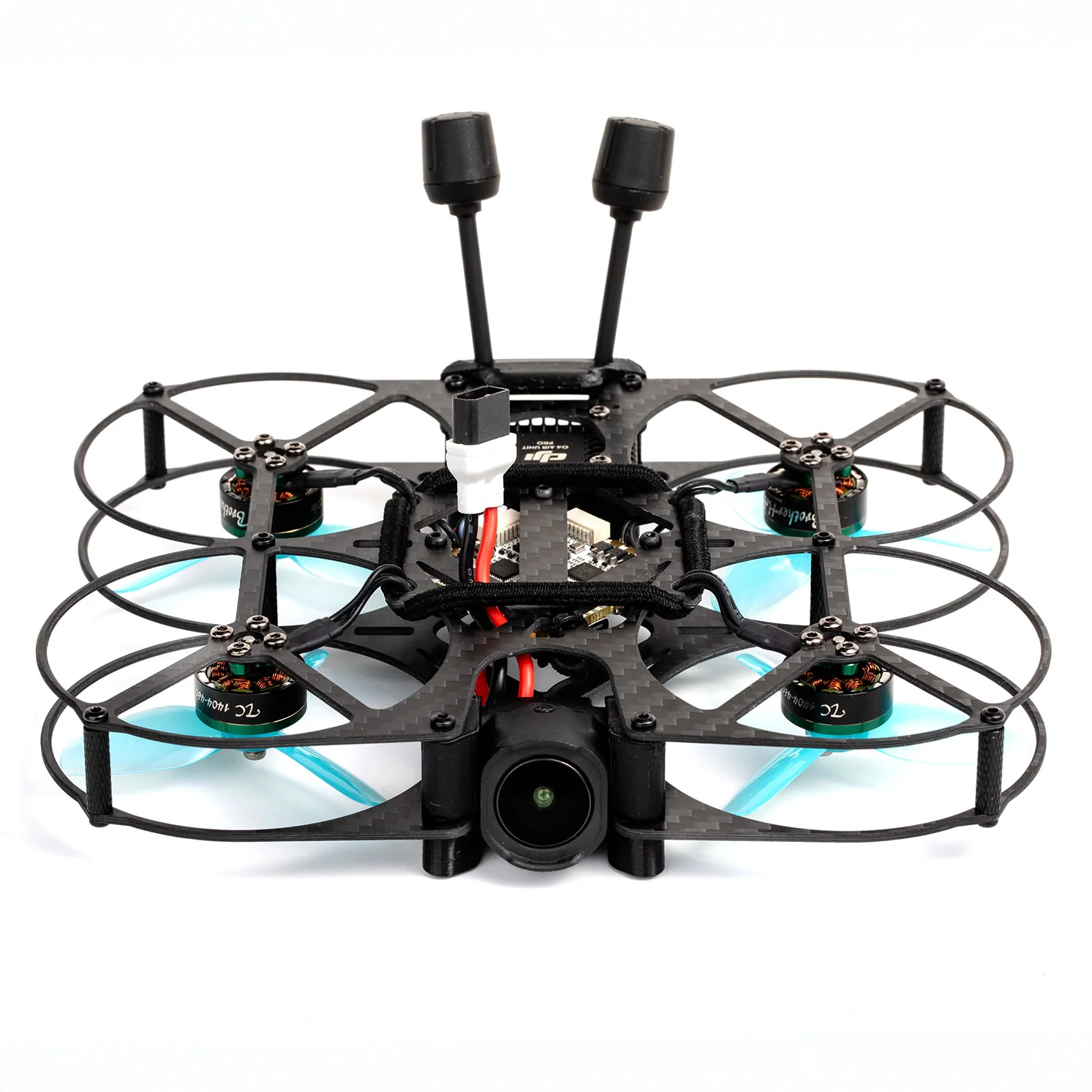
FPV racing involves piloting high-performance quadcopters through a designated course, typically marked by gates, flags, and other obstacles, while viewing the action live through FPV goggles. Unlike traditional line-of-sight (LOS) drone flying, FPV puts you directly in the cockpit, creating an incredibly immersive experience. The goal is simple: complete the course faster than your competitors, showcasing your piloting skill and the sheer speed of your drone. These aren't just toys; FPV racing drones are custom-built machines designed for maximum agility and raw power.
The Rush of Competition and Community
Beyond the individual thrill, FPV racing offers a vibrant and welcoming community. From local meetups to international competitions, pilots share tips, build together, and push each other to improve. The competitive aspect adds another layer of excitement, turning casual flights into adrenaline-fueled battles against the clock and other pilots. It's a sport that rewards dedication, quick thinking, and constant learning.
Beyond Racing: The Versatility of FPV Drones
While racing is in the name, the skills you develop translate directly into other exciting aspects of the FPV world. Many racing drones are equally capable of FPV freestyle, where pilots perform incredible aerial acrobatics and creative maneuvers. The same technology also powers cinematic FPV drones used for capturing stunning, dynamic video footage. Learning to race provides a solid foundation for any direction you might want to take your FPV journey.
Essential Gear: Your Toolkit for Taking Flight
To get started with FPV racing, you'll need a few key pieces of equipment. Think of these as your core FPV racing drone parts list.
The FPV Drone: RTF, BNF, or DIY?
Your drone is, naturally, the star of the show. For beginners, there are three main options:
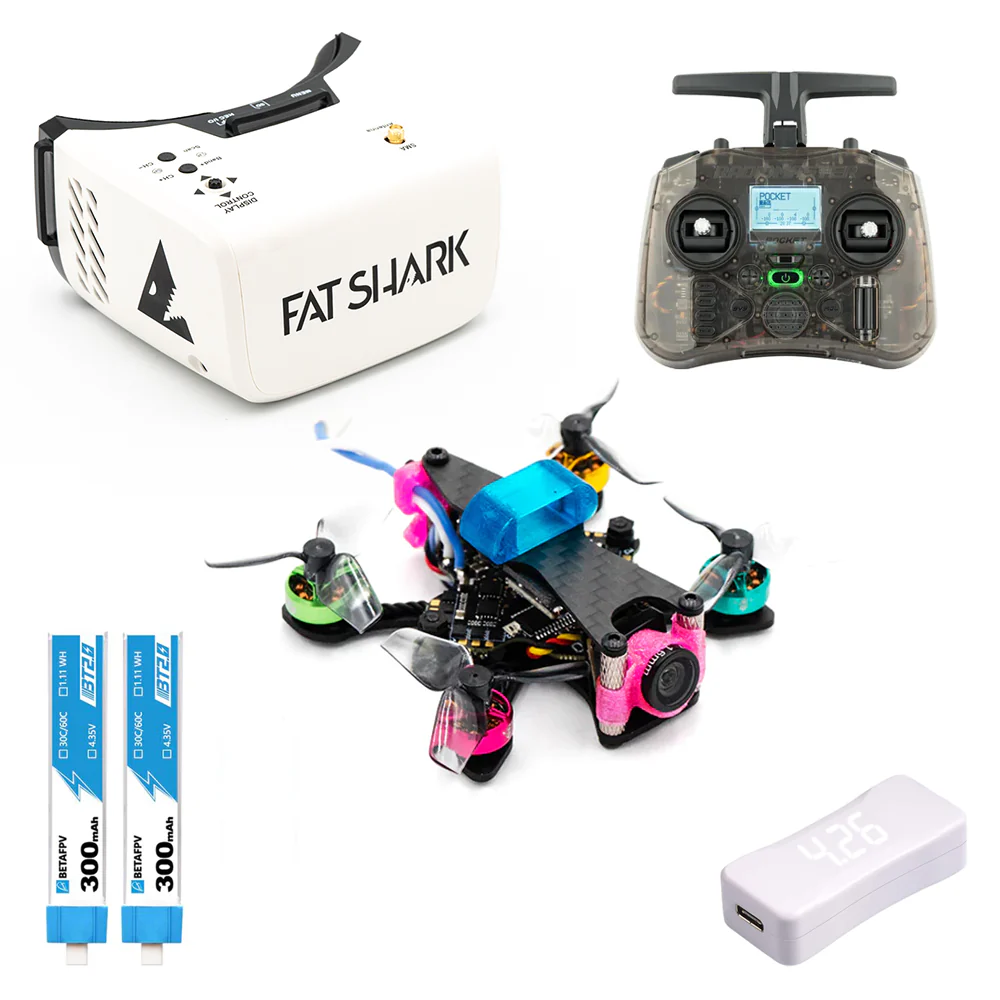
- RTF (Ready-To-Fly) Kits: These kits come with everything you need – drone, goggles, and radio transmitter – pre-bound and ready to go. They are the easiest entry point and often the best budget FPV racing drone option for absolute beginners. Examples include the Eachine Novice-III or the BetaFPV Cetus Pro Kit.
- BNF (Bind-N-Fly) Drones: These drones come fully assembled but without a radio transmitter or goggles. You'll need to purchase those separately and "bind" them to the drone. This offers more flexibility in choosing your radio and goggles. The Mobula7 ELRS is a fantastic BNF option for indoor/small outdoor flying.
- DIY (Do-It-Yourself) Builds: For the truly adventurous, building your own drone from individual components offers maximum customization and a deeper understanding of the technology. However, it's generally not recommended for your very first setup due to the complexity involved.
Pro Tip: For your first drone, especially a tiny whoop, look for brushless motors over brushed. Brushless motors are more powerful, efficient, and durable, offering a much better flight experience and longevity.
FPV Goggles: Your Eyes in the Sky
These are your window into the drone's perspective. Goggles receive the video feed from your drone's VTX (Video Transmitter).
- Analog Goggles: These are the most common and budget-friendly choice for beginners. They offer low latency (minimal delay) crucial for racing, but the video quality can be grainy, especially at range. Popular beginner models include the Eachine EV800D (a great all-in-one box goggle) or the Skyzone Cobra X.
- Digital Goggles: Systems like DJI FPV Goggles 2, HDZero, and Walksnail Avatar offer incredibly clear, high-definition video. However, they are significantly more expensive and often have slightly higher latency, though this is constantly improving. For a true racing start on a budget, analog is often preferred.
Radio Transmitter: Your Command Center
This is how you control your drone. It's crucial to get a good quality radio that feels comfortable in your hands and offers compatibility with various drone protocols (like ELRS, FrSky, Crossfire).
- Mode 2: This is the standard control scheme, with throttle/yaw on the left stick and pitch/roll on the right.
- Beginner-Friendly Radios: Look for radios like the Radiomaster Zorro, Jumper T-Lite V2, or FrSky X-Lite. These offer excellent build quality, good gimbals (the sticks), and support popular protocols, ensuring they'll grow with you.
- Simulator Compatibility: Ensure your chosen radio can connect to your computer for simulator practice. Most modern radios support this via USB.
Batteries, Charger, and Must-Have Accessories
- LiPo Batteries: FPV drones use Lithium Polymer (LiPo) batteries, known for their high power output but also requiring careful handling. For tiny whoops, you'll likely start with 1S (single cell) or 2S batteries (e.g., 300-600mAh). As you progress to larger drones, you'll use 4S or 6S batteries.
- LiPo Charger: A dedicated balance charger is essential for safe and effective charging. Chargers like the ToolkitRC M4AC or Hota D6 Pro are popular choices, allowing you to charge multiple batteries and monitor their health. Always charge LiPo batteries in a fire-safe bag and never leave them unattended.
- Propellers: You'll crash, and props will break. Always have plenty of spares!
- Basic Tools: Small screwdrivers, tweezers, and a prop removal tool are invaluable.
- LiPo Safe Bag: A must-have for charging and storing your LiPo batteries safely.
Mastering the Simulator: Your Crucial Training Ground
Before you even think about putting props on your drone, you must spend time in a simulator. This is arguably the most important step in your learn FPV racing journey.
Why Simulators Are Non-Negotiable for Beginners
- Cost-Effective Learning: Crashing in a simulator costs nothing. Crashing a real drone can lead to broken parts, expensive repairs, and downtime.
- Safe Practice Environment: You can experiment with aggressive maneuvers and high speeds without any risk to yourself or others.
- Build Muscle Memory: Repeated practice in a simulator helps your brain and hands develop the necessary reflexes and coordination for real-world flying.
- Progressive Difficulty: Simulators offer various tracks, environments, and even drone physics settings to gradually increase the challenge.
Recommended FPV Racing Simulators
Connect your radio transmitter to your computer (usually via USB) and dive into one of these excellent options:
- Velocidrone: Widely regarded as having the most realistic physics for racing. A favorite among competitive pilots.
- Liftoff: FPV Drone Racing: Excellent graphics, a wide variety of drones and tracks, and a good balance of realism and fun. Great for beginners.
- DRL Simulator (Drone Racing League): Based on the official DRL racing series, offering intense competition and realistic tracks.
- Uncrashed: FPV Drone Simulator: Known for its stunning graphics and open-world environments, alongside challenging race tracks.
Effective Practice Drills to Build Muscle Memory
Don't just fly aimlessly. Practice with purpose:
- Basic Hovering: Start by simply hovering in one spot, maintaining altitude and position.
- Figure Eights: Practice smooth, controlled figure-eight patterns to get a feel for turns and stick inputs.
- Gate Practice: Focus on consistently flying through gates without hitting them. Start with wide gates, then gradually narrow them.
- Track Laps: Once comfortable, try completing full laps on a simple race track, focusing on smooth lines rather than speed initially.
- Power Loops & Rolls (Advanced): As you progress, experiment with basic freestyle moves to gain better drone control.
Pro Tip: Spend at least 10-20 hours in the simulator before your first real flight. Consistency is key – short, regular practice sessions are more effective than long, infrequent ones.
Transitioning from Simulator to Real World
The transition can be jarring. The real world has wind, gravity feels different, and the consequences of a crash are real. Start slowly, in a wide-open space, and don't expect to fly like your sim self immediately. Your brain knows the movements, but your hands need to adjust to the physical forces.
Your First Real Flights: Basic Techniques and Safety Protocols
You've put in the sim time, now it's time for the real thing! Remember, safety first.
Pre-Flight Checks and Essential Safety Guidelines
- Location, Location, Location: Choose a wide-open area free from people, animals, power lines, and obstacles. A large, empty field or park is ideal.
- Spotter: Always fly with a spotter who can keep an eye on your drone while you're in your goggles and warn you of any hazards.
- Battery Check: Ensure your LiPo batteries are fully charged and securely mounted.
- Propeller Check: Make sure props are securely attached and oriented correctly (usually marked R/L).
- Control Check: Before arming, power on your drone and radio, put on your goggles, and visually confirm that your stick inputs (roll, pitch, yaw, throttle) correspond correctly to the drone's movements (e.g., move the roll stick left, and the drone in your goggles should tilt left).
- Arming Switch: Understand how to arm and disarm your drone. This is usually a dedicated switch on your radio.
- Respect the Power: FPV drones are powerful. Always keep your fingers and face clear of the propellers when armed.
Understanding Basic Flight Controls: Throttle, Roll, Pitch, Yaw
Assuming you're using Mode 2:
- Throttle (Left Stick Up/Down): Controls altitude. Up increases power (ascend), down decreases power (descend).
- Yaw (Left Stick Left/Right): Rotates the drone horizontally around its central axis. Left turns the nose left, right turns the nose right.
- Pitch (Right Stick Up/Down): Tilts the drone's nose up or down. Up moves the drone forward, down moves it backward.
- Roll (Right Stick Left/Right): Tilts the drone left or right. Left moves the drone left, right moves it right.
Navigating Flight Modes: Angle, Horizon, and Acro
Your flight controller (running firmware like Betaflight) offers different flight modes:
- Angle Mode (Self-Leveling): The drone automatically levels itself when you release the sticks. This is the easiest mode for beginners and highly recommended for your very first flights. It prevents you from over-tilting and crashing easily.
- Horizon Mode (Partial Self-Leveling): A hybrid mode. It self-levels at small stick inputs but allows for flips and rolls if you push the sticks to their extremes. A good stepping stone between Angle and Acro.
- Acro Mode (Rate Mode): The drone holds its last commanded angle and does not self-level. This is the mode used for racing and freestyle, offering full manual control and unlimited maneuverability. It requires constant stick input and is much harder to master, but it's where the real fun begins!
Pro Tip: Start in Angle mode. Get comfortable hovering and moving gently. Once you feel confident, try Horizon, and then gradually transition to Acro in the simulator before attempting it in real life.
Your First Hover and Gentle Maneuvers
- Arm the Drone: With props clear, arm your drone.
- Gentle Takeoff: Slowly increase throttle until the drone lifts off the ground by about 1-2 meters.
- Hover: Practice maintaining a stable hover. Make small, precise adjustments to throttle to hold altitude, and tiny inputs to roll, pitch, and yaw to keep it in place.
- Gentle Forward Flight: Once hovering is comfortable, gently push the right stick forward to move slowly, then release to self-level (in Angle mode). Practice moving forward, backward, left, and right.
- Gentle Turns: Combine yaw with a slight roll and pitch to execute smooth, wide turns.
Remember, take it slow, land often, and learn from every flight.
Buyer's Guide: Choosing Your First FPV Racing Setup
Choosing your first beginner FPV racing drone and accompanying gear can feel overwhelming. Let's simplify it.
Budget-Friendly Starter Kits vs. Component Builds
- Starter Kits (Recommended for Beginners): As mentioned, these are the easiest way to jump in. They provide a cohesive package, often at a lower initial cost than buying components separately. Look for kits like the Eachine Novice-III RTF or the BetaFPV Cetus Pro FPV Whoop Kit. These typically include a small, durable "tiny whoop" drone, basic goggles, and a decent radio.
- Component Builds: While more expensive and complex upfront, buying individual components allows for greater customization and higher quality gear that will last longer. If you're serious about the hobby and have a larger budget, you might consider this route after some research.
Key Specifications to Look For in Beginner Drones
When looking at a beginner FPV racing drone, consider:
- Size (Wheelbase): For starting, tiny whoops (65mm-85mm) are excellent. They are durable, safe for indoor/small outdoor flying, and less intimidating. Larger 3-inch or 5-inch drones are for more advanced outdoor racing.
- Motor Type: Brushless motors are superior to brushed for durability, power, and efficiency.
- Flight Controller: Most modern FPV drones run Betaflight, which is highly configurable and the industry standard.
- Video Transmitter (VTX) Power: For tiny whoops, 25mW is usually sufficient for close-range flying. For larger drones, 200mW-600mW offers better range.
- Receiver Protocol: Ensure your drone's receiver matches your radio's protocol (e.g., ELRS, FrSky D8/D16). ELRS (ExpressLRS) is highly recommended for its excellent range, reliability, and low latency, and is becoming the new standard.
Top Recommendations for Your First FPV Racing Drone
- Eachine Novice-III RTF Kit: An excellent all-in-one kit that includes a 2.5-inch brushless drone, goggles, and a radio. It's a great value and offers a good balance of indoor/outdoor capability.
- BetaFPV Cetus Pro FPV Whoop Kit: A fantastic true tiny whoop kit. Comes with a durable brushless drone, basic but functional goggles, and a comfortable radio. Perfect for indoor learning.
- Mobula7 ELRS (BNF): If you're willing to buy a radio and goggles separately, the Mobula7 is a legendary 75mm brushless tiny whoop. Its durability and flight characteristics make it a favorite for both racing and freestyle in small spaces. Pair it with a Radiomaster Zorro and Eachine EV800D goggles for a solid entry-level setup.
Where to Purchase Your FPV Gear
- Online FPV Retailers: Websites like GetFPV, RaceDayQuads, Pyrodrone, and Rotor Riot (US-based) offer a wide selection and good customer service.
- International Marketplaces: Banggood and AliExpress can offer lower prices but often involve longer shipping times and potentially less reliable customer support.
- Local Hobby Shops: If you're lucky enough to have one, supporting local businesses can provide invaluable advice and immediate access to parts.
FAQ: Your FPV Racing Questions Answered
Is FPV racing expensive to get into?
It can be, but it doesn't have to be! You can start with a decent RTF kit for as little as $150-$250 (e.g., BetaFPV Cetus Pro Kit). As you progress, you might invest more in higher-end components, but the initial barrier to entry is quite reasonable, especially compared to other extreme sports. Simulators are also a very cheap way to get started.
How long does it take to learn FPV racing effectively?
Learning to fly FPV effectively takes dedication. Most pilots recommend at least 10-20 hours in a simulator before your first real flight. To become proficient enough to race competitively, expect anywhere from 6 months to a year or more of consistent practice. It's a continuous learning process!
Do I need a license or registration to fly FPV drones?
This varies significantly by country and drone weight. In many places, small "toy" drones or tiny whoops under 250 grams may not require registration. However, larger drones (typically 250g and above) often do. Always check your local aviation authority's regulations (e.g., FAA in the US, EASA in Europe, SHGM in Turkey) before flying.
What's the difference between FPV racing and FPV freestyle?
- FPV Racing: Focuses on speed, precision, and completing a predefined course in the fastest time. The goal is efficiency and competitive performance.
- FPV Freestyle: Emphasizes creative aerial maneuvers, tricks, and expressive flying. Pilots aim to perform aesthetically pleasing and technically challenging sequences, often in interesting environments. Many skills overlap, and pilots often enjoy both!
Can I race indoors or only outdoors?
You can absolutely race indoors! Tiny whoops (65mm-75mm drones) are specifically designed for indoor flying, making them perfect for practicing in your living room, garage, or even dedicated indoor FPV tracks. Larger 3-inch and 5-inch drones are typically flown outdoors due to their speed and power.
Conclusion: Your FPV Racing Journey Begins Now!
Recap of Your FPV Jumpstart
You've now got a solid foundation for your FPV racing journey! We've covered:
- The exhilarating appeal of first-person view racing.
- The essential FPV racing setup guide including drones, goggles, and radio transmitters.
- The critical role of FPV racing simulators for safe and effective practice.
- Your first steps with basic FPV racing techniques and crucial safety protocols.
- A buyer's guide to help you find the best budget FPV racing drone.
Embrace the Learning Curve and Have Fun
FPV racing is a challenging but incredibly rewarding hobby. Don't get discouraged by crashes – they are part of the learning process! Embrace the journey, celebrate small victories, and remember that every flight, whether in the simulator or real life, is an opportunity to improve. The FPV community is vast and supportive, so don't hesitate to ask questions and connect with other pilots.
Call to Action: Grab Your Gear and Get Flying!
The adrenaline, the immersion, the community – it's all waiting for you. Now that you know how to start FPV racing, it's time to take the leap. Choose your first beginner FPV racing drone setup, load up a simulator, and prepare for an adventure unlike any other.
Welcome to the skies, pilot!
Copyright-safe media generated locally by FPVLovers