Team Profile: Cyclone Drone Racing - USA's DCL Champions
Explore Cyclone Drone Racing, the USA-based DCL team with one championship title, featuring their manager, DCL entry, and pilot roster.
Team Profile: Cyclone Drone Racing - USA's DCL Champions
FPV Racing Pilot's Progression: A Step-by-Step Tutorial from Simulator to Real Track Mastery
Introduction: The Adrenaline-Fueled World of FPV Racing
Ever dreamt of flying a high-speed, agile craft through a challenging course, seeing the world from its very perspective? Imagine the rush as you weave through gates, skim past obstacles, and push the limits of speed and precision, all while feeling like you're in the cockpit. Welcome to the exhilarating, adrenaline-fueled world of FPV (First-Person View) racing!
FPV racing is more than just a hobby; it's a competitive sport where pilots navigate custom-built drones through intricate, often three-dimensional tracks. Using special FPV goggles, you experience the flight as if you were sitting inside the drone, offering an unparalleled sense of immersion and control. It combines lightning-fast reflexes, strategic thinking, and a deep understanding of aerodynamics and drone mechanics.
Your Journey Begins Here: Whether you're a complete novice intrigued by the spectacle or an experienced FPV pilot looking to transition into competitive racing, this comprehensive guide is your roadmap. We'll cover everything from assembling your essential gear and mastering virtual skies in a simulator to executing your first real-world race lines and perfecting advanced techniques. Get ready to embark on a thrilling adventure that will challenge your skills and ignite your passion for flight!
The Thrill of the Race: Understanding FPV Racing
Defining the Sport: Speed, Skill, and Immersive First-Person View
FPV racing is a high-octane sport where pilots compete to complete a designated course in the fastest time. The courses are typically set up outdoors or in large indoor venues, featuring a series of gates, flags, and obstacles that demand precision and speed. The "First-Person View" aspect is crucial: pilots wear FPV goggles that display a live video feed from a camera mounted on the front of their drone, creating an immersive experience that blurs the line between pilot and machine. This direct visual feedback allows for incredibly precise maneuvers at high speeds, which would be impossible with traditional line-of-sight flying.
Racing vs. Freestyle: Knowing the Core Differences and Why it Matters
While both FPV racing and freestyle flying use similar drone technology, their objectives and flying styles are distinct:
- FPV Racing: Focuses purely on speed, efficiency, and completing a defined course in the shortest possible time. Pilots aim for clean, consistent lines, minimizing wasted movement and maximizing throttle management. The emphasis is on precision and competitive performance.
- FPV Freestyle: Emphasizes creativity, aerial acrobatics, and performing elaborate tricks. Pilots often fly in open spaces, chaining together complex maneuvers like power loops, rolls, flips, and dives, often to music. The goal is aesthetic appeal and mastery of drone control for artistic expression.
Understanding this difference is vital because it dictates your equipment choices, practice routines, and even your drone's tuning. While a freestyle drone can race, a dedicated racing drone is often lighter, more aerodynamic, and tuned for maximum speed and responsiveness, making it less ideal for repetitive, heavy-impact tricks.
The Anatomy of an FPV Race Track: Gates, Flags, and Course Design
An FPV race track is a carefully designed battlefield for drones. Key elements include:
- Gates: These are typically square or circular frames that drones must fly through. They can be made of PVC pipe, fabric, or inflatable structures. Gates define the path and often require specific maneuvers.
- Flags/Air Gates: Similar to gates but often taller and narrower, indicating turns or requiring a specific orientation of the drone.
- Checkpoints: Certain gates or areas might be designated as checkpoints that must be cleared in sequence.
- Course Design: Tracks can range from simple oval layouts to complex, multi-level designs incorporating natural terrain or artificial structures. A good course challenges pilots' skills in various ways, testing their ability to handle tight turns, high-speed straightaways, and vertical elements. Knowing how to read a track and find the optimal "racing line" is paramount.
Your Essential FPV Racing Gear Checklist
Starting FPV racing requires a few key pieces of equipment. Investing in quality gear from the outset will save you headaches and money in the long run.
The Pilot's Interface: FPV Goggles & Radio Transmitter Explained
- FPV Goggles: These are your windows into the drone's world.
- Analog Goggles: More affordable and common for beginners. Good options include the Fat Shark Attitude V6 or Skyzone SKY04X. They offer a clear, low-latency analog feed.
- Digital Goggles: Offer superior image quality and range, but are more expensive. The DJI Goggles 2 or Walksnail Avatar HD Goggles X are top choices for digital systems, providing crisp, high-definition video.
- Radio Transmitter (TX): Your remote control.
- Open-Source Radios: Highly recommended for their versatility and customizability. Popular choices include the Radiomaster Zorro or Radiomaster Pocket for portability, or the Radiomaster TX16S Mark II for a full-size, feature-rich option.
- Protocols: Ensure your radio supports a modern protocol like ELRS (ExpressLRS), which offers excellent range and low latency, or TBS Crossfire.
Choosing Your First Racing Drone: Focus on 5-inch Racing Drones and RTF Kits
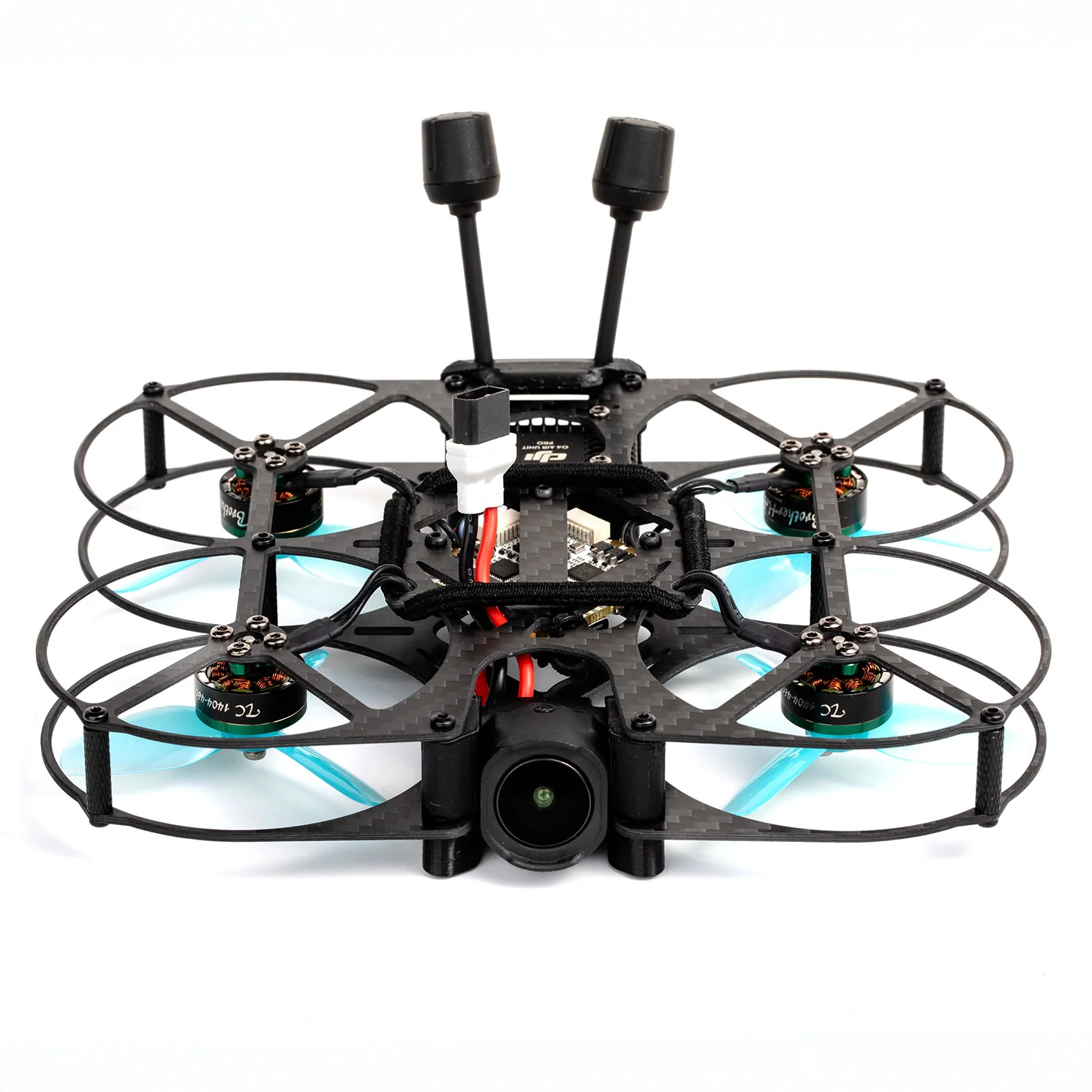
For competitive FPV racing, 5-inch racing drones are the gold standard. They offer the best balance of power, speed, agility, and durability for navigating race tracks.
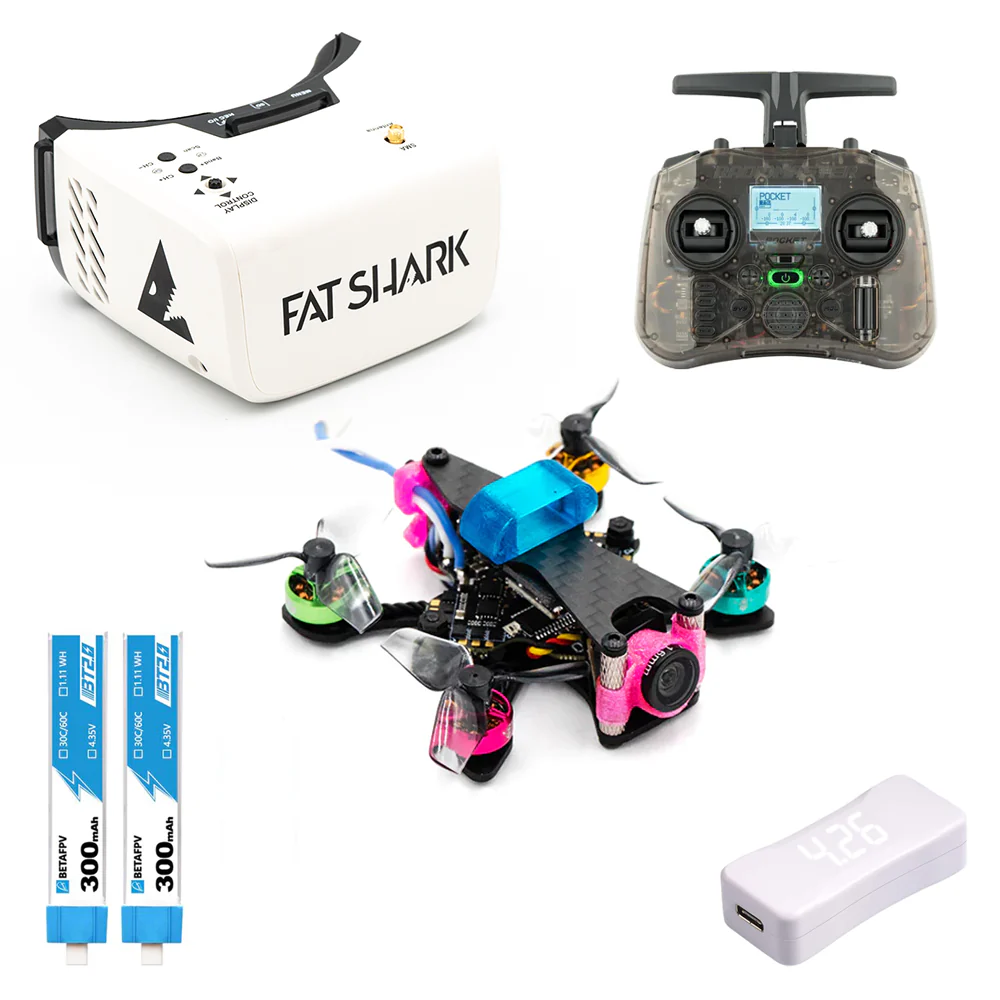
- Ready-to-Fly (RTF) Kits: These are excellent for beginners as they come with everything you need (drone, radio, goggles, batteries) pre-assembled and often pre-bound. While many RTF kits are smaller "Tiny Whoops" or 3-inch freestyle drones, some brands offer 5-inch RTF options. Look for kits that include a powerful 5-inch quad, often running on 4S or 6S LiPo batteries. While dedicated 5-inch racing RTF kits are less common than freestyle ones, some manufacturers like iFlight or GEPRC occasionally offer racing-oriented bundles.
- Bind-and-Fly (BNF) Drones: These come fully assembled but require you to bind them to your existing radio and set up your goggles. This is a common choice for those who already own a radio and goggles. Many excellent 5-inch racing drones are available as BNFs, such as the iFlight Nazgul Evoque F5D or the Diatone Roma F5 V2, offering robust performance right out of the box.
For those looking to build, popular racing frames like the Apex or AOS 5 are highly regarded for their durability and performance.
Powering Your Flight: Batteries, Chargers, and Must-Have Spare Parts
- LiPo Batteries: For 5-inch racing drones, you'll typically use 4S (14.8V) or 6S (22.2V) LiPo batteries with capacities ranging from 1100mAh to 1500mAh. A higher "C-rating" (e.g., 100C or 120C) indicates the battery's ability to discharge current quickly, crucial for the sudden power demands of racing. Aim for at least 4-6 batteries to ensure decent flight time during a practice session.
- LiPo Charger: A good balance charger is essential for safely charging and maintaining your batteries. Brands like iSDT (e.g., Q6 Nano) or HTRC offer reliable options. Always charge in a safe, fireproof environment.
- Spare Parts: Racing means crashes. Always have spares:
- Propellers: Lots of them! They break easily.
- Motor bells: The outer casing of your motors.
- Arm replacements: For your drone frame.
- Battery straps: To secure your LiPos.
- Screws: Various sizes.
- Soldering iron and basic tools: For quick repairs.
Setting Up Your Drone: Basic Betaflight Configuration and Initial Checks
Most racing drones use Betaflight, an open-source flight controller firmware.
- Initial Setup: Connect your drone to your computer via USB. Use the Betaflight Configurator software to perform basic setup:
- Calibrate Accelerometer: Ensures your drone knows "level."
- Set up Modes: Configure switches on your radio for arming, disarming, and flight modes (e.g., Acro Mode for racing).
- Receiver Tab: Verify your radio stick inputs are registering correctly.
- Motors Tab: Carefully test motors (props off!) to ensure they spin in the correct direction.
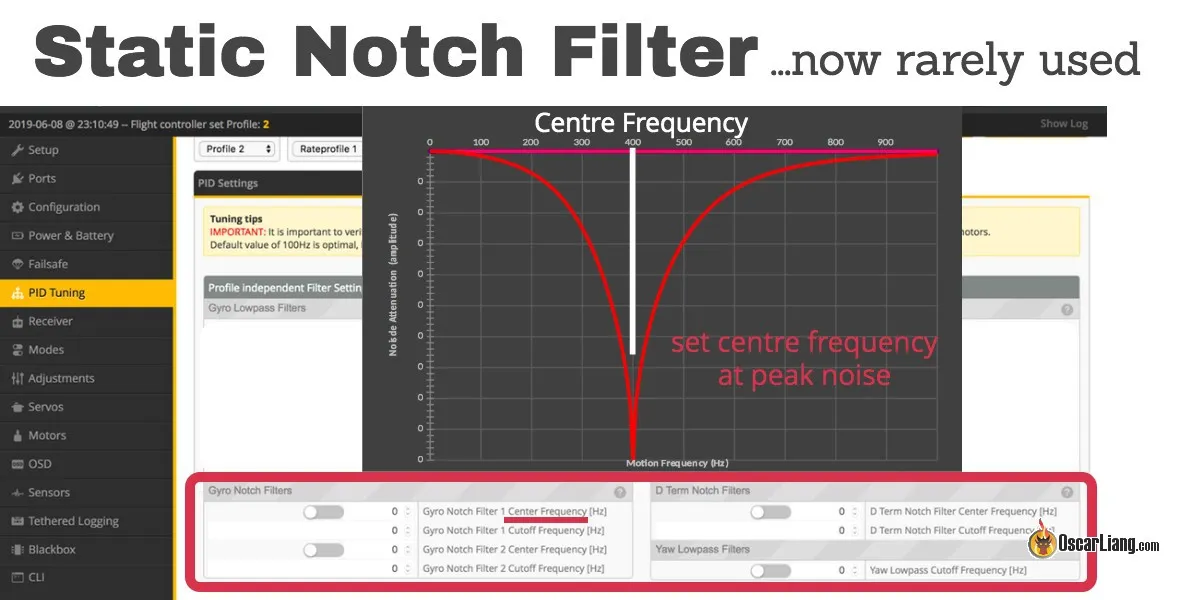
- PID Tuning (Advanced): While stock Betaflight tunes are often good enough to start, advanced pilots fine-tune PID (Proportional, Integral, Derivative) values for optimal flight characteristics, making the drone feel more locked-in and responsive. For beginners, stick with stock or community-recommended tunes.
- Pre-Flight Checks: Before every flight:
- Check all screws are tight.
- Ensure props are on correctly and securely.
- Verify battery is fully charged and strapped securely.
- Check FPV feed clarity and signal strength.
Master the Virtual Skies: FPV Simulators for Success
Why Simulator Practice is Non-Negotiable for Beginners
FPV racing is incredibly challenging, and learning on a real drone can be costly due to frequent crashes. This is where simulators become your best friend.
- Cost-Effective Learning: Crash as many times as you want without breaking actual parts.
- Safe Environment: Practice dangerous maneuvers or push limits without risk to yourself or others.
- Muscle Memory Development: Build essential stick control and coordination before ever touching a real quad.
- Weather Independent: Practice anytime, anywhere, regardless of real-world conditions.
Top FPV Racing Simulators: Which One to Choose and Why
- Velocidrone: Widely considered the most realistic racing simulator. Its physics engine is highly accurate, making the transition to real flight almost seamless. It features many official race tracks and excellent multiplayer options. Highly recommended for serious racers.
- DRL Simulator (Drone Racing League Sim): Features official DRL tracks and drones, providing a competitive, esports-like experience. Physics are good, and it's very engaging for racing.
- Liftoff: Offers a more relaxed, visually stunning experience with good physics. It has a great variety of environments and drone customization, making it enjoyable for both racing and some freestyle practice.
- Uncrashed: A newer simulator gaining popularity for its excellent graphics and highly realistic physics, offering a very immersive experience.
Connect your FPV radio to your computer via USB (most modern radios act as a joystick) to get the most authentic practice experience.
Essential Simulator Drills: Mastering Controls, Basic Lines, and Gate Practice
Start with the fundamentals and gradually increase complexity:
- Hovering and Basic Control: Learn to keep the drone stable in the air, move it precisely, and land smoothly.
- Figure-8s: Practice smooth, coordinated turns. This builds crucial muscle memory for yaw and roll inputs.
- Gate Practice: Start with simple gate layouts. Focus on flying through them cleanly, then work on speed.
- Racing Lines: Experiment with different approaches to gates and corners to find the fastest, most efficient path.
- Power Loops & Splits: While more advanced, practicing these in the sim will make them much safer to attempt in real life.
Dedicate at least 15-30 minutes daily to simulator practice. Consistency is key!
From Simulator to Sky: Your First Real Flights & Fundamental Techniques
Once you've logged significant hours in the simulator and feel confident with your controls, it's time for the real thing.
Safety First: Pre-Flight Checks, Arming Procedures, and Safe Flying Zones
- Location: Choose a large, open area free from people, animals, and obstacles. A local park, open field, or designated flying zone is ideal. Always check local regulations regarding drone flight.
- Pre-Flight Checks (Reiterate): Double-check everything: props tight and correct, battery secure and charged, FPV feed clear, radio linked, no loose wires.
- Arming Procedure: Learn your specific drone's arming sequence (usually a stick combination on your radio). Always arm with props clear and away from your face.
- Spotter: If possible, fly with an experienced pilot or a friend who can act as a spotter, keeping an eye on your drone in the real world while you're in your goggles.
Basic Flight Maneuvers: Hovering, Gentle Turns, and Gate Navigation
- Takeoff and Hover: Gently increase throttle until the drone lifts off. Practice maintaining a stable hover at eye level.
- Gentle Movement: Slowly move forward, backward, left, and right. Focus on smooth, deliberate stick inputs.
- Wide Turns: Start with large, sweeping turns. Coordinate your roll (tilting left/right) with a touch of yaw (rotating horizontally) for smoother, more controlled turns.
- Simple Gate Practice: Set up two simple gates or markers far apart. Practice flying through them one at a time, focusing on accuracy over speed. Gradually bring them closer or add more.
Understanding Racing Lines: The Key to Efficiency and Speed
A "racing line" is the optimal path through a course that allows a pilot to maintain maximum speed and efficiency.
- Apexes: For turns, the "apex" is the innermost point of the corner. The general rule is to enter wide, hit the apex, and exit wide. This allows for a smoother, faster arc.
- Straight Lines: Always aim for the straightest path between gates. Any unnecessary swerving wastes time.
- Throttle Management: Instead of full throttle everywhere, learn to "feather" the throttle. Reduce power slightly before a turn, then apply power smoothly as you exit to accelerate out of the corner.
Elevate Your Game: Advanced Racing Strategies & Tips
Once you're comfortable with the basics, it's time to refine your technique.
Mastering Cornering Techniques: Apexes, Power Loops, and Diving
- Tight Apexes: Practice hitting the absolute innermost point of a corner. This often involves a quick, precise roll and yaw combination.
- Power Loops: A maneuver where you fly up and over an obstacle (like a tall gate or flag) in a tight arc. This requires precise throttle and pitch control.
- Diving: For vertical elements or descending through gates, learn to manage your throttle to fall quickly but controllably, then punch out at the bottom.
- Roll Splits: A more advanced maneuver where you fly through a gate sideways, often used to navigate tight spaces or maintain momentum.
Throttle Control and Power Management for Optimal Performance
- Smooth Throttle: Avoid sudden, jerky throttle inputs. Smooth acceleration and deceleration conserve battery and make for a more stable, faster flight.
- Momentum: Learn to carry momentum through turns. It's often faster to maintain a slightly higher speed through a turn than to slow down too much and have to accelerate aggressively.
- Battery Sag: As your battery drains, its voltage will drop, leading to "sag" (a temporary drop in power under load). Learn to anticipate this and adjust your flying style, especially in the latter half of a race.
Race Day Preparation: Mental Game, Drone Tuning, and Community Etiquette
- Mental Game: Stay calm and focused. Visualize your lines before a race. Don't let a crash in one heat affect your performance in the next.
- Drone Tuning: Ensure your drone is optimally tuned for racing. This might involve adjusting PID gains, filter settings, and motor output limits in Betaflight. Many racers share their tunes online.
- Battery Management: Keep your batteries charged and properly stored. Label them and rotate their usage.
- Community Etiquette: Be respectful of other pilots and organizers. Offer help, ask questions, and be a good sport. The FPV community is generally very welcoming.
- Walk the Track: Before your race, walk the physical track. Visualize your lines, identify tricky spots, and plan your strategy.
The FPV Racing Buyer's Guide: Building Your Arsenal
Building your FPV racing setup can be daunting, but it's also incredibly rewarding.
Ready-to-Fly (RTF) Kits vs. Custom Builds: Pros and Cons for Beginners
- RTF Kits:
- Pros: Easiest way to get started. Everything is included and pre-configured. Good for learning the basics.
- Cons: Often less powerful or durable than custom builds. Limited upgrade paths. Can be more expensive in the long run if you quickly outgrow it.
- Recommendation: Good for absolute beginners who want to test the waters with minimal fuss. For racing, ensure it's a 5-inch kit.
- Custom Builds (Components chosen individually):
- Pros: Tailored to your specific needs and budget. Superior performance, durability, and upgradability. Deepens your understanding of FPV tech.
- Cons: Requires technical knowledge, soldering skills, and time for assembly and configuration. Can be frustrating for first-timers.
- Recommendation: Ideal for intermediate pilots or beginners willing to learn the technical aspects. Offers the best racing performance.
Recommended Gear for Every Budget: From Entry-Level to Pro-Grade (including 5-inch racing drones)
- Entry-Level (Budget around $500-800 for full setup):
- Radio: Radiomaster Zorro ELRS or Radiomaster Pocket ELRS.
- Goggles: Eachine EV800D (box goggles, analog) or Skyzone Cobra X (analog).
- Drone (BNF/RTF): A good 5-inch BNF like an iFlight Nazgul Evoque F5D (with ELRS receiver) or a GEPRC Smart35 (a 3.5-inch that can still race well for beginners). For a true 5-inch RTF, look for offerings from iFlight or GEPRC that are specifically race-tuned.
- Mid-Range (Budget around $800-1200):
- Radio: Radiomaster TX16S Mark II ELRS.
- Goggles: Fat Shark HDO2 (analog) or Walksnail Avatar HD Goggles X (digital).
- Drone (BNF/Custom Build): Diatone Roma F5 V2 (BNF) or a custom build using a durable frame like the AOS 5, powerful motors (e.g., T-Motor F40 Pro IV 2400KV for 4S, or 1750KV for 6S), a reliable flight controller/ESC stack (e.g., Aikon F7/60A), and a good FPV camera (e.g., Caddx Ratel 2).
- Pro-Grade (Budget $1200+):
- Radio: Radiomaster TX16S Mark II or TBS Tango 2 Pro.
- Goggles: DJI Goggles 2/V2 (digital) for ultimate clarity.
- Drone (Custom Build): High-performance frame like the Armattan Rooster or TBS Source One V5, top-tier motors (e.g., XING2 2207 1750KV for 6S), advanced flight controller/ESC stack (e.g., SpeedyBee F7 V3), and a high-quality FPV camera (e.g., RunCam Phoenix 2).
Remember, the provided knowledge base specifically highlights 5-inch racing FPV drones & parts as a primary category for racing, reinforcing that this is the best starting point for competitive flying.
Future-Proofing Your Setup: Smart Upgrades and Essential Accessories
- Modular Goggles: Choose goggles that allow for modular receiver upgrades (e.g., adding a new analog module or upgrading to digital).
- Cross-Compatibility: Stick to popular control link protocols like ELRS or Crossfire so you can easily swap drones.
- Battery Quality: Invest in good quality LiPo batteries; they are a consumable but crucial for performance.
- Accessories: A good toolkit, prop tool, LiPo checker, smoke stopper (for first power-ups of new builds), and a comfortable carrying case for your gear.
Frequently Asked Questions (FAQ) About FPV Racing
How do I get started with FPV racing?
Start with a good FPV simulator (like Velocidrone) and practice consistently. Once comfortable, invest in an entry-level RTF kit or a BNF 5-inch racing drone, a reliable radio, and FPV goggles. Find local FPV communities for mentorship and safe flying spots.
What's the best FPV racing drone for a beginner?
For racing specifically, a 5-inch Bind-and-Fly (BNF) drone equipped with an ELRS receiver is often recommended. Brands like iFlight (e.g., Nazgul Evoque F5D) or Diatone (e.g., Roma F5 V2) offer robust, performance-oriented options that come pre-built, allowing you to focus on flying.
How much does it cost to start FPV racing?
An entry-level setup (radio, goggles, 5-inch BNF drone, batteries, charger) can cost anywhere from $500 to $800. Mid-range setups can be $800-$1200, and pro-grade custom builds can easily exceed $1200. Simulators are a one-time purchase of $20-$40.
How can I find local FPV racing events or communities?
Check Facebook groups for "FPV [Your City/Region]", dedicated FPV forums, or websites like MultiGP.com (a global drone racing league). Local hobby shops can also be a good resource.
Is FPV racing difficult to learn, and how long does it take to get good?
FPV racing has a steep learning curve, requiring significant practice to master. Most pilots spend dozens, if not hundreds, of hours in a simulator before feeling comfortable with real flights. To get "good" (competitive), it can take months or even years of consistent practice and dedication. But the journey itself is incredibly rewarding!
Conclusion: Your Journey to FPV Racing Mastery
The path to FPV racing mastery is an exciting one, filled with challenges, learning, and immense satisfaction. We've covered the exciting transition from mastering virtual skies in a simulator to executing precise maneuvers on a real track, understanding the crucial gear, and honing advanced strategies.
Remember, practice, persistence, and passion are your greatest tools. Every crash is a learning opportunity, and every clean gate is a victory. The FPV community is vibrant and supportive, ready to welcome new pilots and share knowledge.
So, what are you waiting for? Join the FPV community, find a local club, dive into a simulator, and start your high-speed, immersive racing adventure today! The sky is calling, and your drone is ready to answer.
Copyright-safe media generated locally by FPVLovers