Saudi Drone Champions League: First National Competition in Saudi Arabia
Highlights the new national drone racing league, its mixed-reality format, and the upcoming live final at LEAP 2026 in Riyadh.
Saudi Drone Champions League: First National Competition in Saudi Arabia
Beginner FPV Racing Guide: From Sim to Sky, Your First Race
Imagine strapping into a cockpit, not of a fighter jet, but a lightning-fast drone, hurtling through a custom-built course at breakneck speeds. This isn't science fiction; it's the exhilarating world of FPV (First Person View) racing! If the idea of piloting a nimble quadcopter with a live video feed directly to your goggles gets your heart pumping, you're in the right place. This comprehensive guide will take you from a curious beginner to a confident pilot, ready to conquer your first FPV race. We'll cover everything from essential gear and simulator mastery to your first real-world flights and tips for progression. Get ready to launch your FPV racing journey!
The Thrill of FPV Racing: What is it, and Why Join?
FPV racing is more than just a hobby; it's a rapidly growing sport that combines cutting-edge technology with lightning-fast reflexes and strategic thinking. If you're wondering how to start FPV racing, understanding its core appeal is the first step.
Defining FPV Drone Racing: Speed, Agility, and Immersion
FPV drone racing involves pilots navigating custom-built quadcopters through a challenging course marked by gates, flags, and obstacles. The defining characteristic is the "First Person View" – pilots wear goggles that display a live video feed directly from a camera mounted on the drone. This creates an incredibly immersive experience, making you feel as if you are actually sitting in the cockpit of your miniature racing machine. The drones themselves are designed for extreme speed and agility, capable of accelerating from 0 to 100 km/h in under two seconds and executing breathtaking aerial maneuvers.
The Adrenaline Rush: Why Pilots Love It
For many, the draw of FPV racing lies in the unparalleled adrenaline rush. The intense focus required to navigate a complex track at high speeds, making split-second decisions, creates a flow state unlike any other. There's an immense satisfaction in mastering complex maneuvers, shaving milliseconds off your lap times, and pushing your skills to the absolute limit. It's a constant challenge that rewards precision, quick thinking, and dedication. The feeling of flight, the sense of freedom, and the sheer speed are intoxicating.
Community and Competition: More Than Just Flying
Beyond the personal thrill, FPV racing boasts a vibrant global and local community. From online forums and Discord servers to local flying clubs and organized MultiGP races, you'll find a welcoming environment filled with fellow enthusiasts. The camaraderie among pilots, the shared passion for flight, and the desire to improve together are strong motivators. Competition ranges from friendly local meetups to professional leagues with significant prizes, offering opportunities for growth, recognition, and lifelong friendships.
Gearing Up: Your Essential FPV Racing Starter Kit
Getting into FPV racing requires a few key pieces of equipment. Let's break down the beginner FPV drone racing setup you'll need.
The Drone: Ready-to-Fly (RTF) vs. Build Your Own (BNF/PNP)
For beginners, the drone choice often comes down to convenience versus customization.
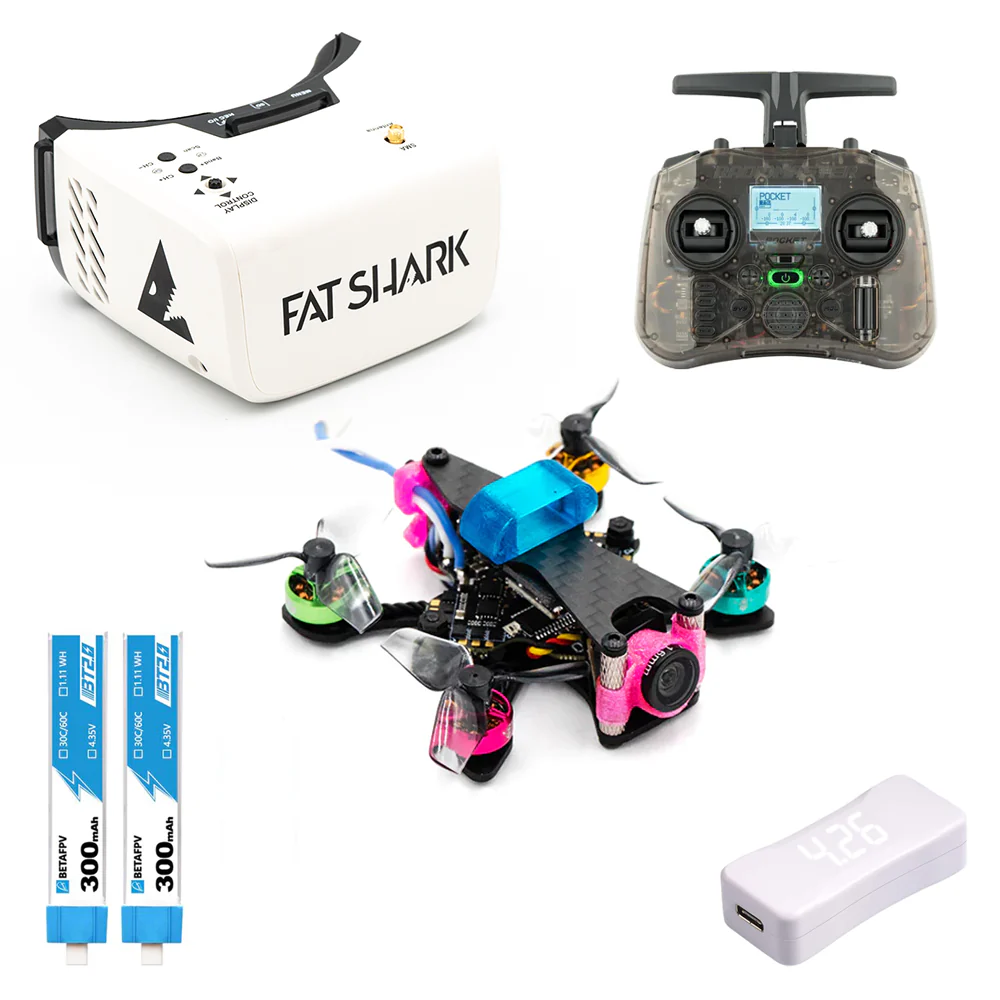
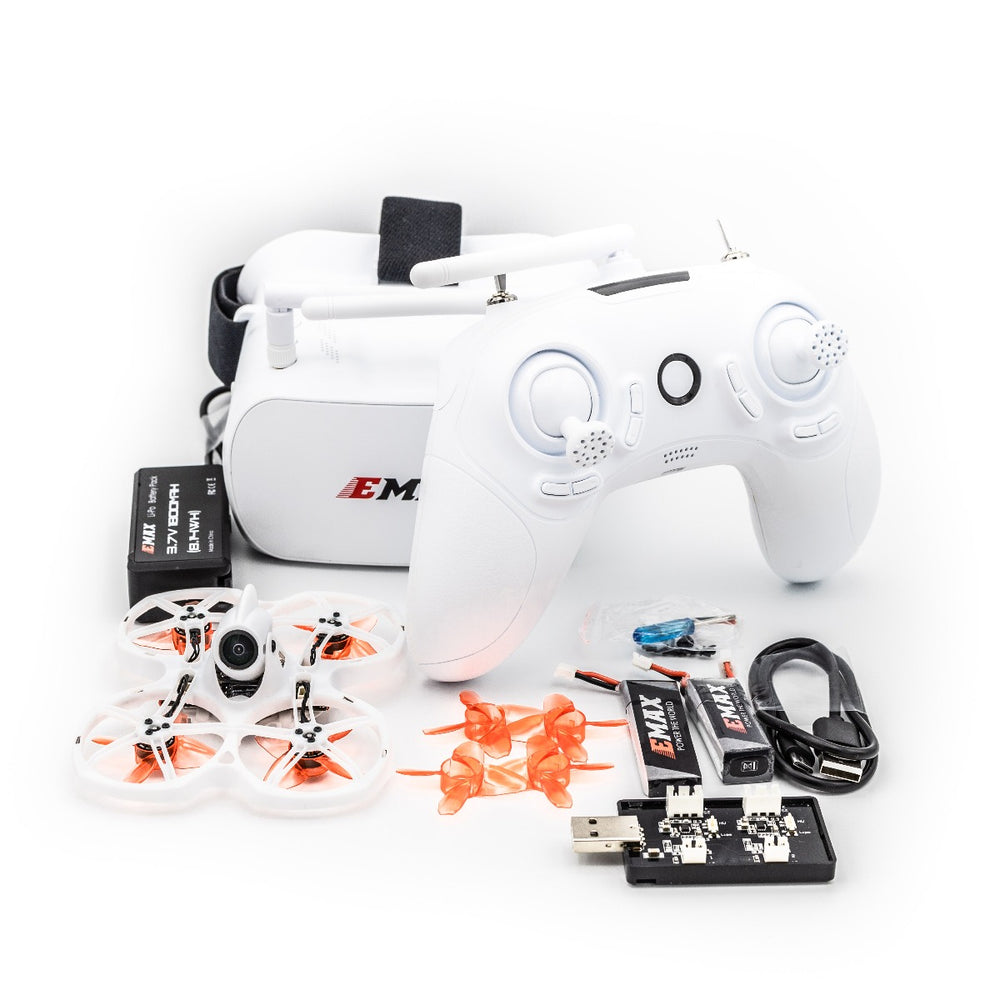
- Ready-to-Fly (RTF) Kits: These are fantastic for absolute beginners as they come with everything you need – the drone, goggles, and a radio transmitter – pre-bound and ready to fly (after charging batteries, of course). Examples include the BetaFPV Cetus X Kit or the EMAX Tinyhawk III Plus Kit. They are generally smaller, less powerful drones (often "whoops" or 2-3 inch quads) perfect for indoor or light outdoor practice, reducing the risk of serious damage and making repairs simpler. They are the easiest way to learn FPV flying.
- Bind-and-Fly (BNF) / Plug-and-Play (PNP): If you want a bit more control over your components but don't want to build from scratch, BNF (requires you to bind your own radio) or PNP (requires your own radio and receiver) drones are an option. These usually come fully assembled but without a radio or sometimes even a receiver. This allows you to choose your preferred radio and goggles separately, often leading to a better overall system than an RTF kit's bundled components. Popular beginner-friendly BNF options include smaller 3-inch quads or even larger 5-inch freestyle drones like the iFlight Nazgul Evoque if you're feeling adventurous after extensive simulator practice.
Practical Tip: Start with an RTF kit or a small, durable BNF drone. A 5-inch racing drone is powerful and fast, but also more prone to damage for a beginner. Master the basics on something smaller and cheaper to repair.
FPV Goggles: Your Window to the Sky
FPV goggles are perhaps the most critical component for immersion. They display the live video feed from your drone's camera.
- Box Goggles: These are typically more affordable and offer a wider field of view, making them excellent for beginners. Examples include the Eachine EV800D or Skyzone Cobra X. They are bulkier but provide a good entry point.
- Compact Goggles: As you progress, you might upgrade to more compact, higher-resolution goggles like the Fat Shark HDO2 (analog) or the DJI Goggles 2/V2 (digital). Digital FPV systems (like DJI, HDZero, Walksnail Avatar) offer significantly clearer video quality with less latency but come at a higher price point. For starting out, analog goggles are perfectly adequate and more budget-friendly.
Key Features for Beginners: Look for goggles with a good receiver (diversity receivers are a plus for better signal), comfortable fit, and decent screen resolution.
Radio Transmitter (Controller): Your Connection to the Drone
Your radio transmitter is how you communicate with your drone. It translates your stick movements into commands.
- Essential Features: Good quality gimbals (Hall effect gimbals are preferred for their precision and durability), support for multiple protocols (like ELRS, Crossfire, or FrSky), and ergonomic design.
- Protocols: ExpressLRS (ELRS) has become the go-to for its exceptional range, low latency, and affordability, making it highly recommended for new pilots.
- Recommended Radios: Popular choices for beginners include the RadioMaster Zorro, RadioMaster Pocket, or the more feature-rich RadioMaster TX16S. These radios offer excellent value and versatility.
Practical Tip: Get a radio with good gimbals from the start. It makes a huge difference in control feel and precision, which is crucial for building good muscle memory.
Batteries, Charger, and Essential Tools: Powering Your Passion
Your FPV racing drone needs power and maintenance.
- LiPo Batteries: These are high-performance lithium polymer batteries. For beginner whoops, you'll likely use 1S or 2S batteries. For larger racing drones, 4S or 6S are standard. Always ensure you buy batteries with an adequate C-rating for your drone's power draw (e.g., 75C or higher).
- Balance Charger: A dedicated LiPo balance charger (e.g., ISDT Q6 Nano, HOTA D6 Pro) is crucial for safely charging and maintaining your batteries. Never use a non-LiPo specific charger.
- Essential Tools:
- Prop Tool: For changing propellers.
- Spare Propellers: You will break props. Lots of them. Buy in bulk.
- Basic Soldering Iron Kit: Essential for repairs, especially as you progress.
- Hex Drivers: For working on your drone's frame.
- LiPo Safe Bag: For charging and storing batteries safely.
Safety First: LiPo batteries can be dangerous if mishandled. Always charge in a fire-safe location, never leave charging batteries unattended, and store them in a LiPo safe bag.
From Pixels to Propellers: Mastering FPV Simulators
If there's one piece of advice that every experienced pilot will give a beginner, it's this: spend significant time in a simulator. This is the best way to practice FPV racing skills.
Why Simulators are Non-Negotiable for Beginners
FPV drones are fast, fragile, and expensive to repair. Simulators allow you to crash repeatedly without any financial consequences. They are your virtual training ground, saving you countless hours and dollars in repairs. You can learn the fundamental physics of flight, build muscle memory, and experiment with advanced maneuvers in a risk-free environment. This is absolutely critical for learning FPV flying effectively.
Top FPV Simulators for Practice and Skill Building
Several excellent FPV racing simulators are available, each with its strengths:
- Velocidrone: Widely regarded for its highly realistic physics, making it a favorite among professional racers. It offers a vast selection of tracks and drone setups.
- DRL Simulator (Drone Racing League): Features official DRL tracks and drones, excellent graphics, and a competitive online leaderboard.
- Liftoff: FPV Drone Racing: Offers a great balance of realistic physics and engaging graphics, with a good variety of environments and customization options.
- Uncrashed: FPV Drone Simulator: Known for its stunning visuals and immersive open-world environments, providing a more "freestyle" focused practice experience.
Recommendation: Start with one or two and stick with them. Consistency is key.
Essential Drills and Practice Routines for Rapid Progress
Structured practice is vital. Don't just fly aimlessly.
- Basic Hovering: Learn to hold your drone steady in one spot, controlling throttle, pitch, roll, and yaw independently.
- Figure-8s: Practice smooth, controlled turns in both directions.
- Gate Practice: Start with a single gate, flying through it cleanly. Gradually add more gates to form simple tracks. Focus on smooth throttle management and maintaining altitude.
- Track Memorization: In racing, knowing the track layout is half the battle. Practice flying specific tracks in the simulator until you can do them consistently.
- Throttle Control: This is often the hardest skill. Learn to manage your altitude and speed precisely using the throttle stick.
- Advanced Maneuvers: Once comfortable, start trying power loops, split-S turns, and consistent S-turns through gates.
Practical Tip: Aim for at least 30 minutes to an hour of simulator practice daily, especially in your first few weeks.
Setting Up Your Radio with the Simulator: First Steps
Most FPV simulators support connecting your physical radio transmitter via a USB cable.
- Connect Your Radio: Plug your radio into your computer's USB port. It should be recognized as a joystick or game controller.
- Select Input Device: In your chosen simulator's settings, select your radio as the input device.
- Calibrate Sticks: Follow the on-screen instructions to calibrate your throttle, roll, pitch, and yaw axes. Ensure all stick movements register correctly.
- Set Up Modes: Configure your arming switch and flight mode switches (e.g., Angle, Acro) within the simulator to match your physical radio setup. Most racing is done in Acro mode, which gives full manual control, so make sure you practice this extensively.
Your First Real Flight: Setup, Safety, and Skills
After countless hours in the simulator, the time will come for your first real-world flight. This is where the rubber meets the road (or the grass!).
Pre-Flight Checks and Safety Protocols: Fly Responsibly
Before every flight, whether it's your first or your thousandth, perform thorough pre-flight checks:
- Visual Inspection: Check for loose screws, damaged props (replace immediately!), and frayed wires.
- Battery Check: Ensure your LiPo battery is fully charged and securely mounted.
- Propeller Direction: Double-check that all propellers are mounted in the correct direction (they are usually marked R for reverse or have specific rotation). Incorrect props will prevent your drone from flying or cause it to flip immediately.
- Failsafe: Verify your failsafe is configured correctly in Betaflight/ArduPilot (your drone's flight controller software). This ensures your drone lands safely if it loses signal.
- Location: Choose a safe, open area away from people, animals, buildings, and obstacles.
- Regulations: Be aware of local drone flying regulations and restricted airspace. Never fly near airports.
Basic Flight Controls and Maneuvers: Getting Airborne
Your radio's stick movements correspond to these drone controls:
- Throttle (Left Stick Up/Down): Controls altitude. More throttle = ascend, less = descend.
- Yaw (Left Stick Left/Right): Rotates the drone horizontally (like turning your head).
- Roll (Right Stick Left/Right): Tilts the drone left or right (like banking a plane).
- Pitch (Right Stick Up/Down): Tilts the drone forward or backward.
Your First Takeoff:
- Place your drone on a level surface.
- Arm your drone (usually by moving sticks in a specific combination or flipping a switch).
- Gently increase throttle until the drone lifts off the ground a few feet.
- Practice hovering, making small corrections with pitch, roll, and yaw to keep it stable.
- Once comfortable hovering, try gentle forward flights, slowly pushing the pitch stick forward and then bringing it back to stop.
Practical Tip: Start in Angle Mode if your drone supports it. This mode self-levels the drone, making it easier to learn. However, quickly transition to Acro Mode (Rate Mode) as this is what FPV racing demands and where true skill is built. Acro mode gives you full manual control without any self-leveling assistance.
Finding Your First Flying Spot: Open Spaces and Low Risk
For your initial real-world flights, prioritize safety and space.
- Large, Open Field: Look for a wide-open grassy area, like a sports field, away from trees, power lines, and buildings.
- No People/Animals: Ensure there are no bystanders who could be injured.
- Private Property (with permission): If possible, find private land where you have explicit permission to fly.
- Avoid Restricted Airspace: Use apps like B4UFLY (for the US) or local aviation authority maps to check for no-fly zones.
Troubleshooting Common Beginner Issues: Don't Panic!
- Drone Flips on Takeoff: Check prop direction, motor spin direction, and flight controller orientation in Betaflight.
- Prop Wash: When your drone flies through its own turbulent air (often during fast descents or tight turns), it can feel unstable. Learn to fly through it or avoid it with smoother lines.
- Signal Loss (Video or Control): Land immediately. Ensure your antennas are properly connected and not obstructed.
- Battery Warnings: Land as soon as you see low voltage warnings to prevent over-discharging your LiPo, which can damage it.
- Minor Crashes: Don't worry, they happen! Check props, motors, and frame for damage before attempting to fly again.
Beyond the Basics: Tips for Progression and Race Prep
Once you're comfortable with basic flight, the real fun of FPV racing begins.
Advanced Maneuvers and Track Navigation Strategies
- Power Loops: Flying up and over an obstacle, then diving back down.
- Split-S: A half-roll followed by a half-loop, used to quickly reverse direction and lose altitude.
- S-Turns: Smooth, flowing turns through a series of gates, maintaining speed and momentum.
- Optimal Lines: Learn to identify the fastest path through a track, minimizing turning radius and maximizing straightaways. Practice "racing lines" in the simulator.
- Throttle Management: Mastering precise throttle control is crucial for maintaining consistent speed and altitude through complex sections.
Joining the FPV Community and Local Races: Find Your Tribe
- Local Clubs: Search for FPV clubs or MultiGP chapters in your area. Flying with experienced pilots is invaluable for learning, getting tips, and finding good flying spots.
- Online Forums & Groups: Engage with communities on Reddit (r/FPV), Facebook groups, and Discord servers. Ask questions, share experiences, and learn from others.
- Local Race Events: Attend local races even if you're not ready to compete. Observe how experienced pilots fly, ask questions, and soak in the atmosphere. This is the ultimate way to prepare for your first FPV race.
Drone Maintenance and Upgrades: Keeping Your Racer in Top Shape
- Routine Maintenance: Regularly clean your drone, check all screws for tightness, inspect props for damage, and ensure all wires are secure.
- Soldering Skills: Learning to solder is essential for FPV. You'll need it for replacing motors, VTXs, cameras, or even just fixing a broken wire.
- Upgrades: As you progress, consider upgrading components like your FPV camera (e.g., RunCam Phoenix 2, Foxeer Predator Nano V5), video transmitter (VTX) for more power/range, or even motor/prop combinations for different performance characteristics.
The Mental Game: Focus, Consistency, and Race Day Nerves
FPV racing is as much a mental sport as it is a physical one.
- Focus: Maintain intense concentration throughout your flight.
- Consistency: Practice flying laps consistently rather than just trying to go fast. Speed will come with consistency.
- Race Day Nerves: It's normal to feel anxious. Breathe, stick to your routine, and remember that everyone started somewhere. Focus on flying clean laps rather than winning.
- Learning from Mistakes: Analyze your crashes and bad laps. What went wrong? How can you improve next time? Don't get discouraged; every crash is a learning opportunity.
Buyer's Guide: Choosing Your First FPV Racing Setup
Let's consolidate some recommendations for your beginner FPV racing setup.
Recommended Beginner RTF Kits: Your All-in-One Start
- BetaFPV Cetus X Kit (2S): An excellent entry-level option that includes a durable 2S brushless drone, decent box goggles, and a capable LiteRadio 3 transmitter. It's powerful enough for outdoor flight in calm conditions but still small enough to be relatively safe for beginners. Expect to pay around $200-$250.
- EMAX Tinyhawk III Plus Kit (1S/2S): Another highly popular option, known for its durability and user-friendliness. The kit includes the Tinyhawk III Plus drone, goggles, and controller. Great for indoor and light outdoor use. Price range $200-$250.
Budgeting for Your FPV Racing Journey: What to Expect
The cost to build or buy a beginner FPV racing setup can vary significantly, but here's a realistic breakdown:
- RTF Kit: $200 - $300 (Drone, Goggles, Radio, a few batteries, basic charger)
- Separate Components (Beginner-friendly):
- Radio Transmitter: $80 - $150 (e.g., RadioMaster Zorro/Pocket)
- FPV Goggles: $100 - $200 (e.g., Eachine EV800D, Skyzone Cobra X)
- Beginner Drone (BNF): $150 - $250 (e.g., EMAX Tinyhawk III Plus, BetaFPV Pavo Pico)
- Batteries (4-6): $50 - $100
- Charger: $50 - $100 (e.g., ISDT Q6 Nano)
- Essential Tools & Spares: $50 - $100 (Props, soldering iron, hex drivers, LiPo safe bag)
- Total for Separate Components: $480 - $900+
While separate components offer better quality and upgrade paths, an RTF kit is the most cost-effective way to get your feet wet.
Key Specs to Look for in Beginner FPV Drones
- Frame Size: For beginners, 2-inch to 3.5-inch drones (like the Cetus X or Tinyhawk III) are ideal. 5-inch drones are standard for racing but more aggressive.
- Motor Size & KV: Smaller numbers (e.g., 1103, 1404) for smaller drones; higher KV for more RPMs. Don't worry too much about this initially with RTF kits.
- Flight Controller (FC): Most modern FCs (F4, F7) are powerful enough. Ensure it supports Betaflight for easy configuration.
- Video Transmitter (VTX): Look for adjustable power output (25mW for indoor, up to 200-600mW for outdoor).
- Durability: Look for frames made of carbon fiber or robust plastic for resilience against crashes.
Where to Buy: Reputable Retailers and Online Stores
- GetFPV: A leading US-based retailer with a massive selection and great customer service.
- RaceDayQuads (RDQ): Another excellent US retailer, popular for its fast shipping and wide product range.
- Banggood: A Chinese online marketplace offering competitive prices, though shipping times can be longer.
- HobbyKing: A long-standing retailer for RC hobbyists, with warehouses worldwide.
- Local Hobby Shops: Support your local stores! They often provide invaluable advice and support.
FPV Racing FAQ: Your Questions Answered
Is FPV racing difficult for a beginner to get into?
While FPV racing has a steeper learning curve than some other hobbies, it's far from impossible. Modern simulators and beginner-friendly RTF kits have made it more accessible than ever. The initial challenge is real, but with patience and consistent practice, anyone can learn. Don't be intimidated; the FPV community is incredibly supportive.
How long does it take to learn FPV flying effectively?
You can gain basic proficiency in FPV flying (hovering, gentle forward flight, simple turns) within a few weeks of consistent simulator practice (30-60 minutes daily). To fly a full race track cleanly and confidently might take a few months of dedicated practice, both in the simulator and with real-world flights. Mastering advanced maneuvers and becoming truly competitive can take a year or more. Consistency is the most important factor in your learning speed.
What's the best way to practice FPV racing skills efficiently?
The most efficient way to practice is through a combination of:
- Dedicated Simulator Time: This is non-negotiable for building muscle memory and learning new skills without risk.
- Structured Drills: Focus on specific skills like hovering, figure-8s, gate accuracy, and throttle control.
- Real-World Practice: Once comfortable in the sim, apply your skills in a safe, open area. Start slow and gradually increase speed and complexity.
- Analyze and Learn: Review your flights (if recorded) or simply reflect on what went well and what needs improvement.
How much does it cost to build or buy a beginner FPV racing setup?
For a complete beginner setup, you can expect to spend:
- RTF Kit: Around $200 - $300. This is the most budget-friendly entry point.
- Building a Setup with Separate, Beginner-Friendly Components: Roughly $500 - $900. This gives you better quality individual components but requires more initial investment.
Remember that this initial cost covers the essentials. Over time, you'll likely spend more on spare parts, additional batteries, and potential upgrades.
Conclusion
The world of FPV racing is a thrilling, rewarding, and constantly evolving adventure. From the moment you first strap on those goggles in a simulator to the exhilarating rush of your first real-world flight, you're embarking on a journey of skill, speed, and community. With the right gear, dedicated practice, and a passion for flight, you'll be navigating gates and challenging fellow pilots in no time. Don't let the initial learning curve deter you; every FPV champion started exactly where you are now. So, what are you waiting for? Grab your controller, fire up a simulator, and take the first step towards becoming an FPV racing pilot today!
Copyright-safe media generated locally by FPVLovers