International Open 2026 Set for Muncie on June 10th
Announce the date and location of MultiGP's premier upcoming event.
The Call of the Track: Your FPV Racing Journey Begins
The roar of tiny motors, the blur of vibrant colors, the adrenaline surge as you navigate a gate at breakneck speed – this is the exhilarating world of FPV (First-Person View) racing. It's a sport that combines cutting-edge technology, lightning-fast reflexes, and a deep sense of community. If you've ever watched a drone race and felt that undeniable pull, you're in the right place.
Welcome to the World of High-Speed FPV
Imagine flying like a bird, but with the precision and speed of a fighter jet, all from the comfort of your pilot's seat. FPV racing offers an immersive experience unlike any other, challenging you to master intricate controls, optimize your drone's performance, and outmaneuver competitors on custom-built tracks. It's a journey that starts with curiosity and quickly evolves into a passion.
What This Guide Will Cover: Your Roadmap to FPV Mastery
This comprehensive tutorial, your ultimate "FPV Racing Pilot's Journey," is designed to guide aspiring pilots from absolute beginner to confident racer. We'll cover everything from understanding the core concepts and selecting your first gear, through essential simulator training and initial real-world flights, all the way to mastering fundamental racing techniques. Our goal is to equip you with the knowledge and practical tips to avoid common pitfalls and launch your FPV racing career with confidence.
What is FPV Racing? Unpacking the Thrill
At its heart, FPV racing is a competitive sport where pilots fly custom-built, high-performance drones through a three-dimensional course, navigating gates and obstacles, all while viewing the action through video goggles that display a live feed from their drone's onboard camera.
Defining FPV Racing: Speed, Agility, and First-Person View
Unlike traditional photography or videography drones, FPV racing drones are built for one purpose: speed and agility. They are lightweight, incredibly powerful, and designed for extreme maneuverability. The "First-Person View" aspect is key; it completely immerses the pilot, making them feel as if they are actually sitting inside the cockpit of their drone, dictating every turn, dive, and acceleration. This immersive experience is what makes FPV racing so uniquely thrilling.
The Anatomy of an FPV Racing Drone: Key Components Explained
Understanding what makes a racing drone tick is crucial. Here's a quick breakdown of the essential components:
- Frame: The skeleton of your drone, typically made from carbon fiber for its strength and light weight. Common sizes for racing are 5-inch, referring to the maximum propeller size.
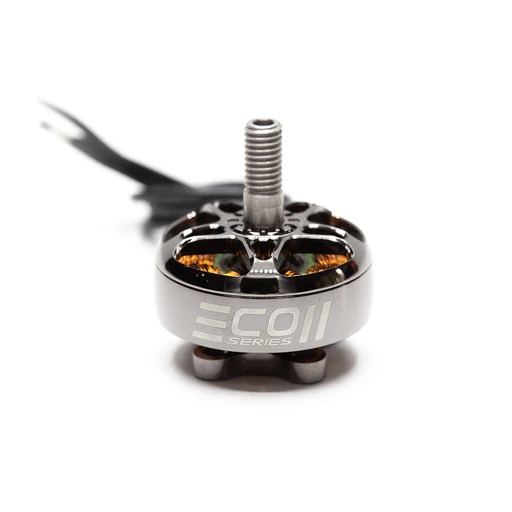
- Motors: Brushless motors provide the incredible power needed for speed and thrust. Paired with propellers, they are the driving force.
- ESCs (Electronic Speed Controllers): These are the brains for each motor, converting signals from the flight controller into power for the motors, controlling their speed and direction.
- Flight Controller (FC): The central computer of the drone. It takes pilot inputs from the radio receiver, processes data from gyroscopes and accelerometers, and sends commands to the ESCs to keep the drone stable and responsive.
- FPV Camera: A small, wide-angle camera mounted at the front, providing the live video feed to your goggles.
- VTX (Video Transmitter): Transmits the video signal from the camera wirelessly to your FPV goggles.
- Receiver (RX): Receives control signals from your radio transmitter, relaying them to the flight controller.
- Battery: High-discharge LiPo (Lithium Polymer) batteries provide the intense power required, typically 4S (14.8V) or 6S (22.2V) for 5-inch racing drones.
Why FPV Racing is More Than Just a Hobby: Community and Competition
Beyond the technical challenge and the adrenaline, FPV racing fosters a vibrant global community. Pilots connect through local clubs, online forums, and major competitions. It's a place to share knowledge, troubleshoot issues, celebrate victories, and forge friendships. The competitive aspect pushes pilots to constantly improve, innovate, and master their craft, making it a truly engaging and evolving sport.
Gearing Up: Essential Equipment for Aspiring Pilots
Starting your FPV racing journey requires a few key pieces of equipment. Think of these as your personal cockpit and race machine.
The Core Four: Drone, Goggles, Radio Transmitter, and Batteries
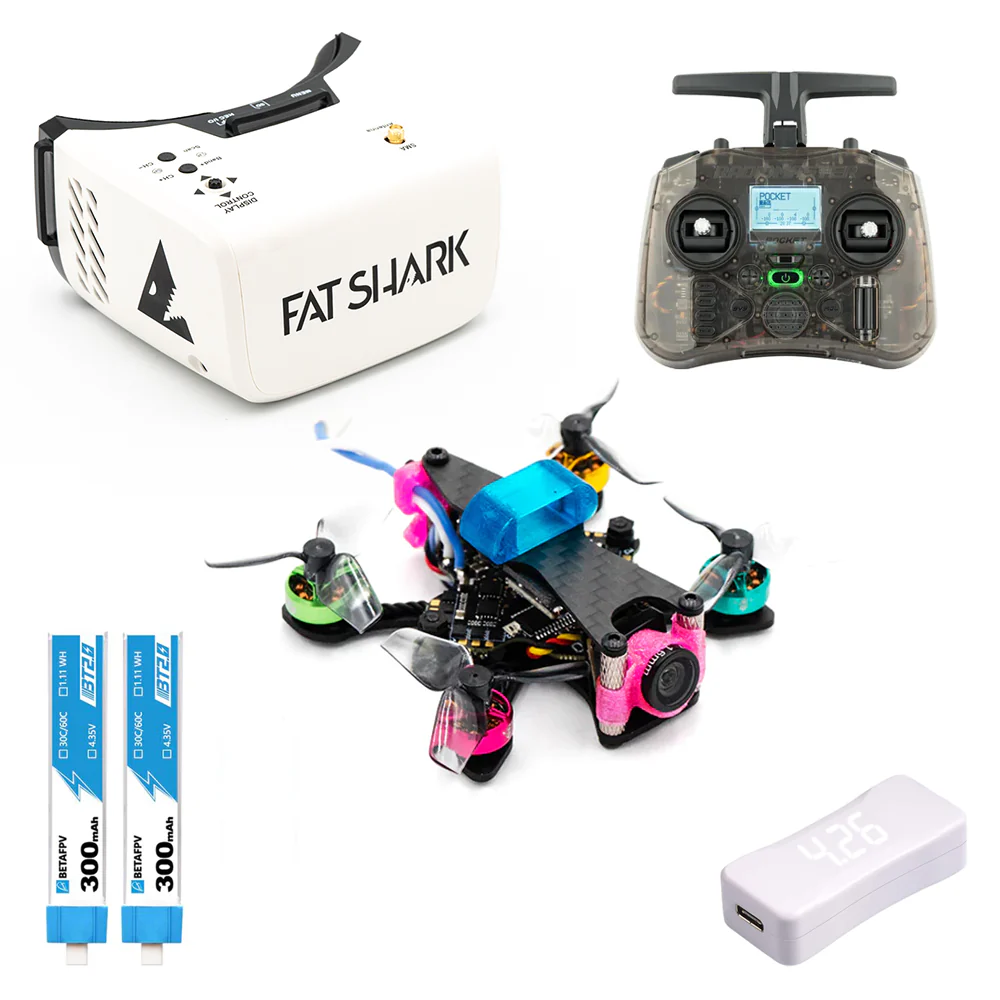
- FPV Drone: For racing, you'll eventually want a 5-inch quadcopter. However, beginners often start with smaller, more durable options like a Tiny Whoop or a 3-inch toothpick drone for indoor practice or learning in smaller spaces.
- FPV Goggles: These immerse you in the flight experience. Options range from budget-friendly box goggles (e.g., Fat Shark Recon V3) to advanced, high-resolution digital systems (e.g., DJI Goggles 2, Walksnail Avatar HD Goggles X). Digital systems offer superior image quality but come at a higher price point.
- Radio Transmitter (TX): Your remote control. Popular choices for beginners include the Radiomaster Zorro or TX16S, and FrSky Taranis QX7 or X-Lite. These offer full customization and support various protocols. Always opt for a radio that feels comfortable in your hands.
- LiPo Batteries: You'll need several for your drone (e.g., 4S 1300mAh for a 5-inch drone) and a small battery for your goggles. Ensure you have a good balance charger.
Understanding Drone Components: Frames, Motors, ESCs, and Flight Controllers
As detailed above, each component plays a critical role. When choosing your first drone, especially a Ready-to-Fly (RTF) or Bind-and-Fly (BNF) kit, these components are pre-selected. However, as you advance, you'll learn to choose specific frames (e.g., Apex, Source One), motors (e.g., Emax Eco II, T-Motor F-series), ESCs (e.g., Aikon, BLHeli_32), and Flight Controllers (e.g., SpeedyBee, Holybro) based on your flying style and performance goals. The "5″ RACING FPV DRONES & PARTS" category is where you'll find the components for standard racing setups. For smaller, more durable options to learn on, consider "TINY WHOOP FPV DRONES & PARTS" for indoor fun or "TOOTHPICK FPV DRONES & PARTS" for lightweight outdoor agility.
Beyond the Basics: Chargers, Tools, and Must-Have Spares
- LiPo Charger: A good balance charger like the ISDT Q6 Nano or ToolkitRC M4AC is essential for safely charging your batteries.
- Tools: A basic toolkit including hex drivers, pliers, soldering iron (for repairs), and prop tools.
- Spare Propellers: You will crash. A lot. Having multiple sets of spare props is non-negotiable.
- Battery Straps: Secure your LiPo batteries to your drone.
- Loctite: For securing motor screws.
- Heat Shrink Tubing & Zip Ties: Handy for repairs and securing wires.
- Voltage Checker: To monitor your battery health.
Pilot Tip: Always buy more props than you think you need. Seriously. And invest in a good charger; it's a safety and longevity investment for your expensive batteries.
Mastering the Virtual Skies: Simulator Training
Before you ever arm a real FPV drone, you must spend significant time in a simulator. This isn't optional; it's the most cost-effective and safest way to learn.
Why Simulators are Non-Negotiable for FPV Beginners
FPV drones are incredibly responsive and unforgiving. Without prior experience, your first real flight will likely end in a crash, potentially damaging your drone and frustrating your progress. Simulators allow you to crash repeatedly without consequence, learn muscle memory, understand controls, and develop flight instincts in a risk-free environment. This is where you learn "how to start FPV racing" without breaking the bank.
Top FPV Simulators to Kickstart Your Practice
Connect your radio transmitter to your computer via USB, and you're ready to fly virtually. Here are some of the best:
- Velocidrone: Widely regarded as having the most realistic physics, especially for racing. Many professional pilots use it for practice.
- Liftoff: Great graphics, a good variety of tracks and environments, and solid physics. Excellent for immersion.
- DRL Simulator (Drone Racing League Sim): Features real DRL tracks and drones, offering a competitive environment. Physics are good but can feel a bit different from reality.
- Uncrashed: Known for its open-world environments and realistic crash physics, making it great for freestyle practice alongside racing.
Effective Practice Routines: Drills to Build Muscle Memory and Confidence
Start in "Angle" mode to understand basic controls, then quickly transition to "Acro" mode – this is how you race.
- Hovering & Gentle Circles: Master holding a stable hover and smoothly flying in large circles in both directions.
- Figure Eights: Practice smooth turns and directional changes.
- Gate Practice: In the simulator, set up simple gate courses. Focus on hitting the center of each gate, maintaining consistent altitude.
- Racing Lines: Learn to cut corners and find the most efficient path around a track.
- Power Loops & Rolls: Once comfortable, practice more advanced maneuvers.
Pilot Tip: Consistency is key. Dedicate 15-30 minutes daily to simulator practice. It's better than one long session a week. Focus on smooth control inputs rather than speed initially.
From Screen to Sky: Your First Real Flight
The transition from simulator to real drone is a monumental step. Take it slow, prioritize safety, and remember everything you learned.
Pre-Flight Checks and Safety Protocols: Before You Arm
- Location: Choose a wide-open, clear area, far from people, animals, and obstacles. Check local regulations for drone flight.
- Weather: Avoid windy conditions for your first flights.
- Drone Inspection: Check for loose screws, damaged props (ensure they're on correctly!), and secure battery.
- Battery Check: Ensure both drone and goggle batteries are fully charged.
- Radio Check: Verify your radio is bound and controls respond correctly (props off!).
- Spotter: Ideally, have a friend act as a spotter to keep an eye on your drone and surroundings while you're in your goggles.
- Arming Switch: Understand and practice your arming/disarming procedure with props off.
Basic Controls Explained: Throttle, Roll, Pitch, and Yaw
- Throttle (Left Stick Up/Down): Controls altitude. More throttle = higher, less throttle = lower.
- Yaw (Left Stick Left/Right): Rotates the drone horizontally (like turning your head).
- Pitch (Right Stick Up/Down): Tilts the drone forward or backward.
- Roll (Right Stick Left/Right): Tilts the drone left or right.
In Acro mode, the drone holds its last commanded angle. If you pitch forward and release the stick, it will continue pitching forward until you command it otherwise. This is why simulator practice is vital.
Your First Hover and Gentle Maneuvers: Taking It Slow
- The Lift-Off: Gently increase throttle until the drone lifts off the ground. Try to maintain a stable hover at eye level.
- Gentle Movements: Once hovering is stable, try small inputs of roll, pitch, and yaw. Don't overcorrect. Smoothness over speed.
- Landing: Reduce throttle slowly and gently guide the drone to a soft landing. Disarm immediately.
Pilot Tip: Your first flights should be short. Focus on controlled take-offs, stable hovers, and soft landings. Don't try to race on your first battery!
Common Beginner Mistakes and How to Avoid Them
- Flying Too High/Far: Keep the drone close and at a manageable altitude. You need to be able to see it if your video feed drops.
- Panicking and Crashing: If you feel overwhelmed, reduce throttle to disarm (if safe) or try to gently land. Don't fight it into the ground.
- Ignoring Pre-Flight Checks: Skipping these leads to preventable crashes.
- Flying in Restricted Areas: Always know local drone regulations.
- Not Enough Simulator Practice: This is the biggest mistake. Trust the process!
Beyond the Basics: Developing Racing Skills
Once you're comfortable with basic flight, it's time to refine your "FPV racing techniques for beginners" and start thinking like a racer.
Understanding Racing Lines and Gate Navigation
A racing line is the most efficient path through a course, minimizing distance and maximizing speed. It often involves cutting corners, finding the apex of turns, and maintaining momentum.
- Apex Clipping: For inner turns, aim to hit the "apex" (the innermost point of the turn) to make the turn as wide as possible, allowing you to carry more speed.
- Flow: Focus on smooth transitions between gates rather than individual gate hits. Think several gates ahead.
Cornering Techniques: Mastering Power Loops and Hairpins
- Power Loops: A maneuver where you fly over an obstacle (like a gate) and then dive back down through it. Requires precise throttle and pitch control. Practice in the simulator!
- Hairpin Turns: Tight, 180-degree turns. Often involves a quick yaw and roll input, sometimes combined with a slight throttle cut to "drift" through the turn.
Improving Your Speed, Precision, and Consistency
- Repetition: Fly the same track layout repeatedly. This is how you build muscle memory and identify optimal lines.
- Video Review: Record your flights (many FPV goggles have DVR) and watch them back. Identify areas for improvement.
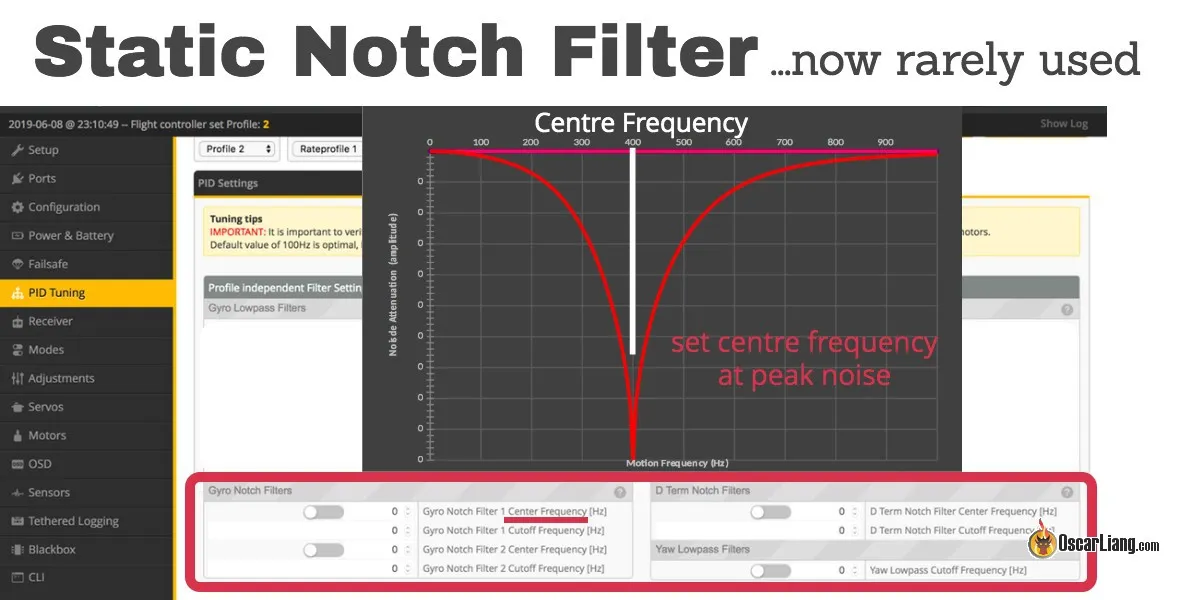
- PIDs and Tuning: As you gain experience, you might delve into PID (Proportional-Integral-Derivative) tuning in your flight controller software (e.g., Betaflight) to make your drone feel more locked-in and responsive to your specific flying style. This is advanced but crucial for competitive racing.
Joining the FPV Community: Local Races and Online Resources
The FPV community is incredibly welcoming.
- Local Clubs: Search for "FPV racing clubs near me" or check local hobby shop bulletin boards. Flying with experienced pilots is invaluable.
- Online Forums & Social Media: Join Facebook groups, Discord servers, and forums like RotorRiot or FPV.fm.
- Events: Look for local races, fly-ins, or casual meetups. Even just watching others race can teach you a lot.
Buyer's Guide: Choosing Your First FPV Racing Setup
Navigating the market for your first FPV setup can seem daunting. Let's simplify it.
Ready-to-Fly (RTF) vs. Bind-and-Fly (BNF) vs. Build-Your-Own Kits
- Ready-to-Fly (RTF) Kits: The easiest entry point. These kits come with everything you need: drone, radio, goggles, and batteries, all pre-configured. Ideal for absolute beginners.
- Recommendation: Look at kits like the BetaFPV Cetus X RTF Kit or the Eachine Novice-IV. These often include a small, durable drone (like a Tiny Whoop or a 2-3 inch quad), a basic radio, and box goggles, providing a complete "fpv drone flying tutorial" package.
- Bind-and-Fly (BNF) Drones: These drones come fully assembled and tuned, but without a radio or goggles. You buy those separately and "bind" your radio to the drone. This offers more flexibility in choosing your preferred radio and goggles.
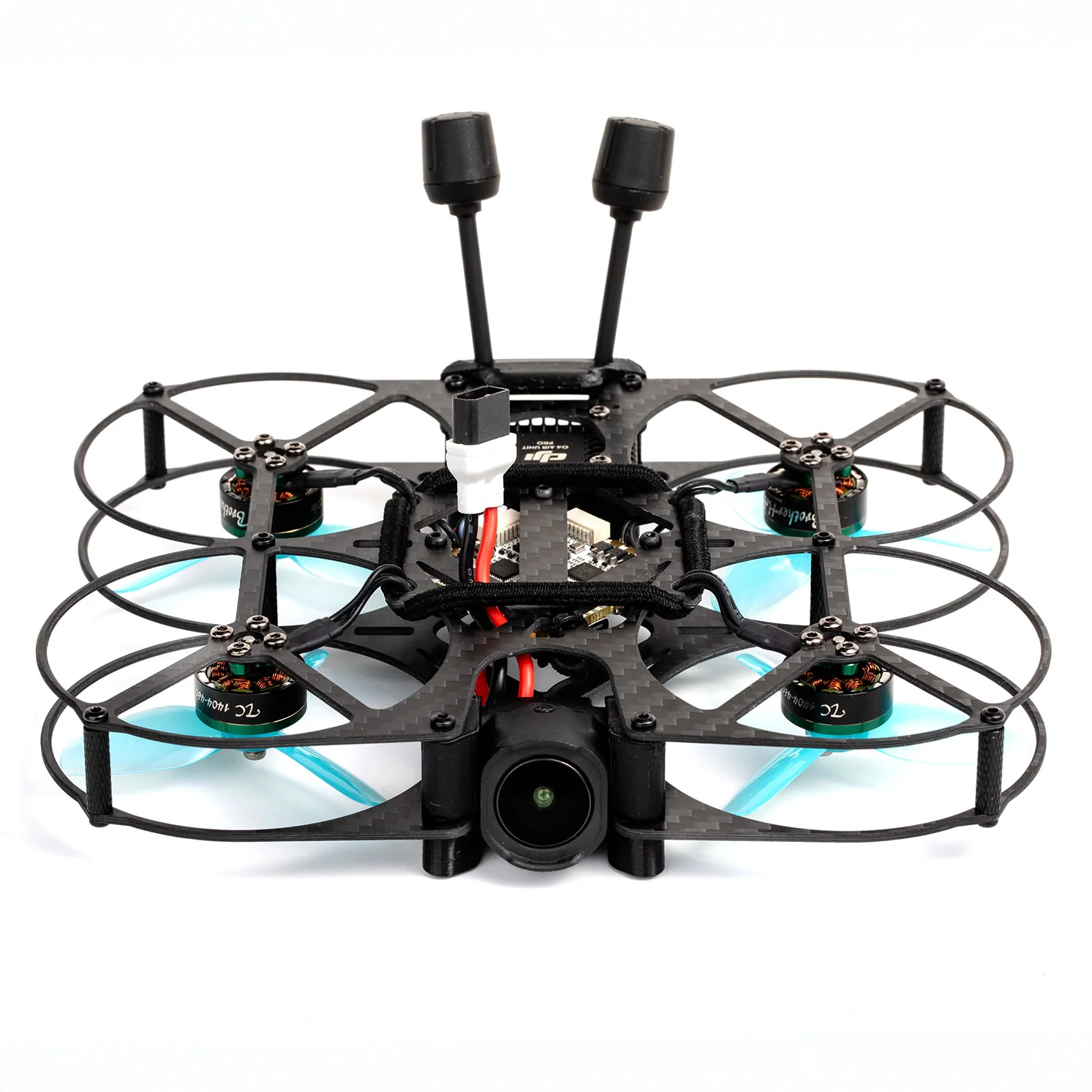
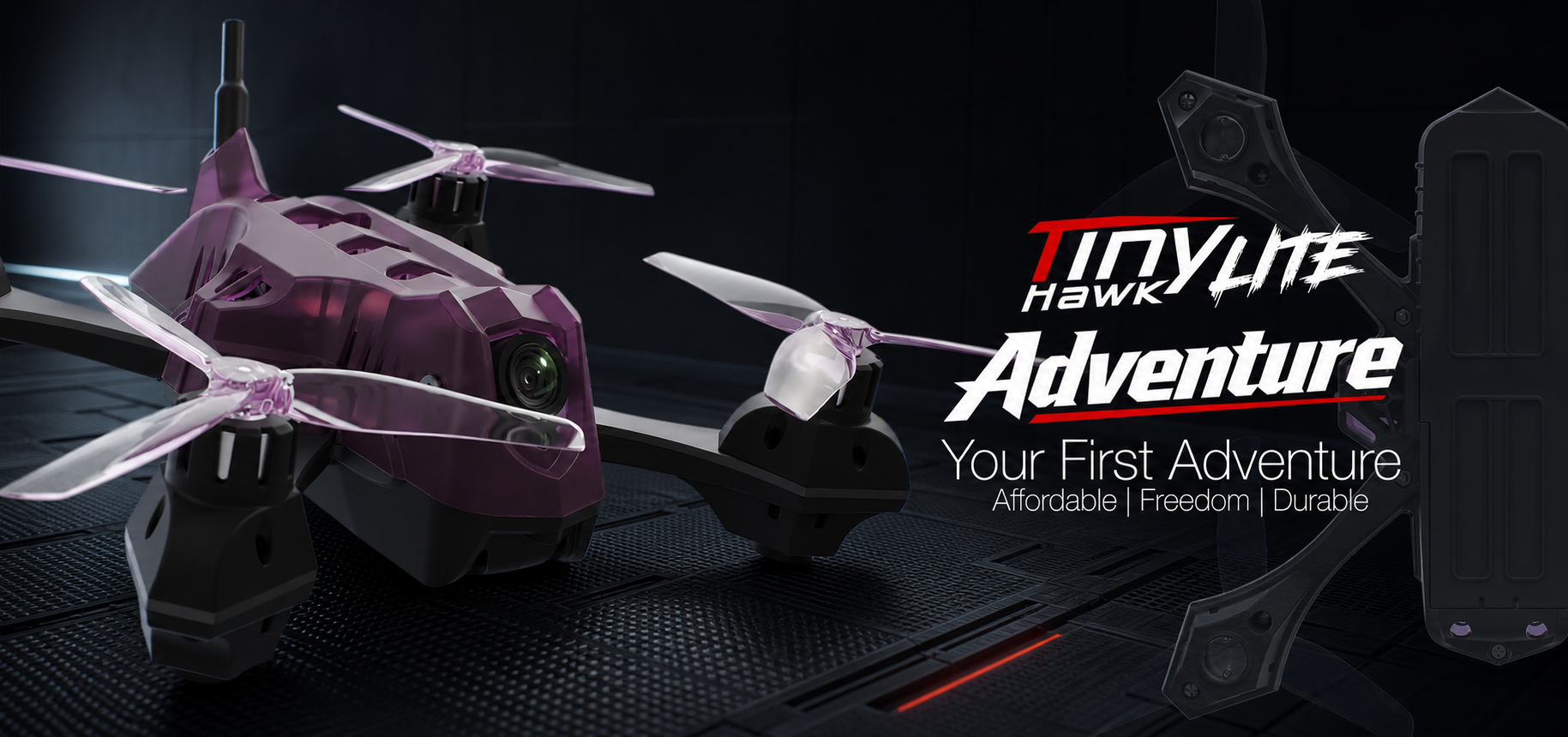
- Recommendation: Once you have a good radio and goggles, a BNF 3-inch or 4-inch quad (e.g., GEPRC CineLog25 for gentle outdoor or a Tinyhawk Freestyle II for more aggressive small-space flying) can be a great step before a full 5-inch racer.
- Build-Your-Own Kits: For the truly adventurous. You buy all components separately and assemble the drone yourself. This is the most educational but also the most challenging. It requires soldering skills and a deeper understanding of each part.
- Recommendation: Start building only after you've flown an RTF or BNF for a while. A popular beginner-friendly frame like the iFlight Nazgul Evoque F5 or a simple Source One frame, combined with carefully chosen components, can be a rewarding build.
Recommended Beginner FPV Drones and Essential Components
For "best FPV racing drone beginner" options:
- Small & Durable (Indoor/Backyard): Tiny Whoop style drones (e.g., BetaFPV Meteor series, Mobula7). Excellent for learning controls in a safe environment.
- Outdoor Trainer (More Power): 3-inch or 4-inch "toothpick" or "freestyle" quads. More robust than Whoops, but less intimidating than 5-inch.
- Radios: Radiomaster Zorro (compact, gamepad style) or Radiomaster TX16S (full-size, feature-rich).
- Goggles: For analog, Fat Shark Recon V3 (box goggles) or Skyzone SKY04X (premium binocular). For digital, DJI Goggles 2 or Walksnail Avatar HD Goggles X (higher initial cost but superior image).
Budgeting for Your FPV Journey: What to Expect
FPV racing can range from relatively affordable to quite expensive.
- Entry-Level RTF Kit: ~$200 - $400 (drone, basic radio, basic goggles).
- Mid-Range BNF Setup: ~$500 - $800 (good radio, decent analog goggles, 3-4 inch BNF drone).
- Competitive 5-inch Setup (Analog): ~$800 - $1200 (premium radio, top-tier analog goggles, 5-inch BNF drone, multiple batteries, charger, spares).
- Competitive 5-inch Setup (Digital): ~$1200 - $2000+ (premium radio, digital goggles, 5-inch digital BNF drone, multiple batteries, charger, spares).
Pilot Tip: Don't feel pressured to buy the most expensive gear upfront. Start with a solid RTF kit or a good radio/goggles with a cheaper BNF. You can always upgrade components later as your skills and interest grow.
FAQ: Your FPV Racing Questions Answered
What's the best way to start FPV racing on a budget?
Start with a simulator and a good radio (like a Radiomaster Zorro). Once you're comfortable, invest in an entry-level RTF Tiny Whoop kit. This allows you to get flying for under $300-400 and practice indoors without fear of expensive crashes.
How much practice do I need on a simulator before flying a real drone?
Aim for at least 10-20 hours of dedicated simulator practice, specifically in Acro mode, until you can consistently take off, hover, fly basic patterns (circles, figure eights), and land without crashing. The more, the better!
Is FPV racing legal everywhere, and what regulations should I know?
Drone regulations vary significantly by country and even by local municipality. Always check your local aviation authority's rules (e.g., FAA in the US, EASA in Europe, DGCA in Turkey). Key considerations include registration, maximum altitude, airspace restrictions, flying near airports, and maintaining visual line of sight (even with FPV goggles, a spotter is often required to maintain VLOS of the drone).
What's the difference between analog and digital FPV systems for racing?
- Analog: Older technology, characterized by lower resolution (similar to old TV static), but offers minimal latency and generally better penetration through obstacles. More affordable. Most existing race tracks are set up for analog.
- Digital: Newer technology, offering much higher resolution, clearer image, and often better range. However, it can have slightly higher latency (though rapidly improving) and "cuts out" more abruptly when signal is lost. More expensive. Systems like DJI O3 Air Unit, Walksnail Avatar, and HDZero are popular. For racing, low latency is critical, so choose carefully.
How do I find a local FPV racing community or club?
- Online Search: Use terms like "FPV racing club [your city/region]" or "drone racing [your city/region]".
- Social Media: Search Facebook groups for "FPV [your country/city]".
- FPV Forums: Ask on large FPV forums if anyone knows of local groups.
- Local Hobby Shops: Often a hub for local drone enthusiasts.
- Event Websites: Check sites like MultiGP for registered racing chapters and events near you.
Take Flight! Your FPV Racing Adventure Awaits
You've embarked on an incredible journey into the world of FPV racing. From understanding the intricate components of your drone to mastering the virtual skies and taking your first real flight, you now have a solid foundation.
Recap of Your FPV Racing Pilot's Journey
We've covered the thrill of FPV racing, the essential gear from drones to goggles, the non-negotiable importance of simulator training, and the practical steps for your maiden flight. We've also touched on advanced racing techniques and how to navigate the exciting world of FPV community and competition.
Your Next Steps: Practice, Learn, and Race!
The path to becoming a skilled FPV pilot is paved with practice and perseverance. Keep flying in the simulator, learn from every crash (virtual or real), and don't be afraid to ask questions. The FPV community is eager to help new pilots succeed.
Join the FPV Revolution: Start Your Racing Journey Today!
The FPV racing scene is dynamic, innovative, and incredibly rewarding. Whether you dream of competing on a global stage or simply enjoying the unparalleled freedom of flight, your adventure starts now. Grab your radio, fire up that simulator, and prepare to experience the world from a breathtaking, first-person perspective. The track is calling – are you ready to answer?
Copyright-safe media generated locally by FPVLovers