How to Choose FPV Motors: Understanding KV, Stator Size, and Propeller Matching
An educational guide detailing stator size numbering (e.g. 2207, 2306), KV options, battery voltage (4S vs 6S) scaling, and matching propeller pitch to motor size.
The FPV Motor Matchmaker: Perfectly Pairing Power to Your Drone
Confused by numbers like 2207, 2306, and KV ratings when choosing FPV motors? You're not alone! Selecting the right motors is paramount for unlocking your drone's true potential, whether you're ripping through gates, performing buttery smooth freestyle, or capturing cinematic shots. These spinning powerhouses are the heart of your quadcopter, directly influencing speed, agility, efficiency, and flight feel.
This comprehensive guide will demystify FPV motors, providing you with a step-by-step tutorial to perfectly match them with your drone frame, battery, propellers, and desired flying style. From understanding stator dimensions to harmonizing KV with your LiPo cells, we'll cover everything you need to know. Get ready to power up your FPV experience and build a drone that flies exactly how you envision!
Decoding FPV Motor Nomenclature: Size Matters
The first step in choosing FPV motors is understanding what the numbers printed on them actually mean. This nomenclature provides crucial information about the motor's physical size and, consequently, its power characteristics.
Understanding Motor Dimensions (e.g., 2207, 2306)
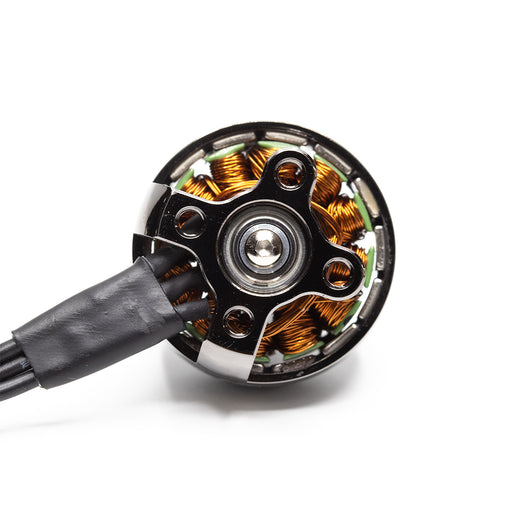
When you see a motor labeled "2207" or "2306," these four digits refer to the dimensions of the motor's stator. The stator is the stationary part of the motor, around which the windings are coiled, and the magnets on the rotating bell interact.
- First two digits (e.g., 22 in 2207): Represent the diameter of the stator in millimeters. So, a 2207 motor has a stator diameter of 22mm.
- Last two digits (e.g., 07 in 2207): Represent the height of the stator in millimeters. Thus, a 2207 motor has a stator height of 7mm.
So, a "2306" motor would have a 23mm diameter stator and a 6mm tall stator. This "FPV motor size explained" is fundamental to motor selection.
The Impact of Stator Size on Performance
How do these dimensions translate to real-world performance?
- Larger Stator Diameter (e.g., 23xx vs. 22xx): Generally means more surface area for magnets, leading to more torque. More torque translates to better responsiveness, quicker acceleration, and the ability to spin larger or higher-pitch propellers more efficiently without bogging down. Think of it as having more leverage.
- Taller Stator Height (e.g., xx07 vs. xx06): A taller stator provides more copper windings within the magnetic field, which typically means more power at higher RPMs. It can handle more current and generate more thrust, often providing a "punchier" feel at the top end.
So, when comparing "2207 vs 2306 FPV motors," a 2306 motor might offer slightly more torque due to its larger diameter, while a 2207 could have a bit more top-end power due to its taller stator, depending on the specific winding and magnet strength. Modern motors like the T-Motor F60 Pro IV 2207 are popular for finding an excellent balance.
Common Motor Sizes for Different Drone Classes
The size of your drone's frame dictates the maximum propeller size it can accommodate, which in turn largely determines the appropriate motor stator size.
- 3-inch Micro Drones: Typically use smaller, lighter motors like 1404, 1507, or 1606. These are designed for efficiency and agility on smaller platforms.
- 5-inch Freestyle/Racing Drones: This is the most common class. Motors are usually in the 22xx, 23xx, or 24xx range. Examples include 2207, 2306, 2307, 2407. Some pilots even go for 2507 for extra torque on heavier 5-inch builds.
- 6-inch Long-Range/Freestyle Drones: Often use larger motors like 2507 or 2806.5 to efficiently spin bigger 6-inch propellers, prioritizing efficiency and smooth power.
- 7-inch Long-Range/Cinematic Drones: Require substantial power and torque, typically using motors like 2806.5 or 3110 to manage large 7-inch props and heavier payloads for extended flight.
The KV Conundrum: Speed, Torque, and Battery Compatibility
Beyond physical size, the KV rating is the second most critical factor in FPV motor selection. Understanding "FPV motor KV meaning" is essential for optimal performance and preventing damage to your components.
What is KV? Revolutions Per Volt
KV (often incorrectly called kilovolts, but actually a motor constant) stands for RPMs per Volt. It indicates how many revolutions per minute (RPMs) a motor will theoretically spin for every volt applied, without a propeller load.
For example, a 2400KV motor on a 4S LiPo battery (nominal 14.8V) would theoretically spin at 14.8V * 2400KV = 35,520 RPMs. In reality, with a prop load, the RPMs will be lower, but the KV rating gives you a direct indication of the motor's speed potential.
High KV vs. Low KV: Performance Trade-offs
The choice between high and low KV motors involves significant performance trade-offs:
-
High KV Motors (e.g., 2400KV - 2700KV):
- Characteristics: Spin faster per volt, offering higher top-end speed. Generally produce less torque. Draw more current, especially at higher throttle.
- Ideal Applications: Often favored for 4S racing setups where maximum RPM and speed are prioritized, or for smaller props.
- Example: A Lumenier Skip 2207 2700KV motor would be a strong contender for a lightweight 4S racing drone.
-
Low KV Motors (e.g., 1700KV - 1900KV):
- Characteristics: Spin slower per volt but produce more torque. More efficient, especially with larger or higher-pitch propellers. Lower current draw for the same thrust output.
- Ideal Applications: Perfect for 6S setups, larger props, heavier freestyle builds, or cinematic/long-range drones where efficiency and smooth power delivery are key.
- Example: A BrotherHobby Returner R5 2306.5 1750KV is a popular choice for powerful 6S freestyle builds.
Matching KV to Your LiPo Battery Voltage (Cells)
This is perhaps the most crucial "FPV motor battery compatibility" aspect. You must match your motor's KV rating to your chosen LiPo battery voltage (e.g., 4S, 6S) to ensure optimal performance, prevent overheating, and avoid damaging your components.
- For 4S LiPo Batteries (14.8V nominal): You typically want higher KV motors, usually in the range of 2400KV to 2700KV. This ensures you get enough RPMs for good thrust without drawing excessive current or over-spinning the motor.
- For 6S LiPo Batteries (22.2V nominal): You need lower KV motors, generally between 1700KV and 1900KV. Since 6S provides significantly more voltage, a lower KV motor will spin at a similar or slightly higher RPM range as a high KV 4S setup, but with much greater torque and efficiency. Running a high KV motor (like 2700KV) on 6S would lead to dangerously high RPMs, excessive current draw, motor overheating, and likely motor failure.
Practical Tip: Always check the manufacturer's recommended voltage for your chosen motor. Running a 6S battery on a motor designed for 4S (and vice-versa, though less damaging) is a common and costly mistake.
Harmonizing Motors with Propellers and Frame Size
Motors, propellers, and frame size form a crucial trinity. A perfectly matched combination unlocks maximum performance, efficiency, and the desired flight characteristics.
The Motor-Propeller Synergy: Thrust and Efficiency
The "how to match FPV motors to props" question is about finding the sweet spot where your motor can efficiently spin your propeller to generate optimal thrust without excessive current draw or heat.
- Propeller Diameter: Directly dictated by your frame size. A 5-inch frame takes 5-inch props.
- Propeller Pitch: Refers to the angle of the blade. Higher pitch props (e.g., 5.1-inch pitch) generate more thrust but require more torque from the motor and draw more current. Lower pitch props (e.g., 4.3-inch pitch) are more efficient but produce less raw thrust.
- Blade Count: Tri-blade props are standard for their balance of thrust and smoothness. Bi-blade props are more efficient but offer less grip. Quad-blade props offer immense grip but are less efficient and can stress motors.
General Rule:
- High KV motors (for speed) often pair well with lower pitch, lighter props (e.g., HQProp 5x4.3x3 V1S).
- Low KV motors (for torque/efficiency) can comfortably spin higher pitch, heavier props (e.g., Ethix S5 5x4x3 or Gemfan Hurricane 51433).
- Larger stator motors (e.g., 2306, 2307, 2407) are better suited for higher pitch or heavier props due to their increased torque. Smaller stators (e.g., 2207) might prefer slightly less aggressive props.
Calculating Thrust: What You Need to Know
While a full "FPV motor thrust calculator" is beyond the scope of this guide, understanding the concept of thrust-to-weight ratio is vital. For most 5-inch freestyle or racing drones, you want a thrust-to-weight ratio of at least 5:1, ideally 6:1 to 8:1. This means if your drone weighs 500g, you'd want each motor to produce at least 625g of thrust (500g * 5 / 4 motors = 625g/motor).
Manufacturers often provide thrust data for their motors with various prop combinations. Use these as a guide, but remember that real-world performance can vary slightly.
Frame Size and Arm Length Considerations
Your drone frame's dimensions, especially the arm length and motor mounting patterns, are fundamental.
- Propeller Clearance: The arms must be long enough to provide adequate clearance for your chosen propeller size. A 5-inch frame is designed for 5-inch props, a 6-inch for 6-inch, etc. Trying to fit larger props than intended will result in prop-strike or inefficient airflow.
- Motor Mounting Pattern: Most FPV motors use standard mounting patterns like 16x16mm or 19x19mm (measured between mounting holes). Ensure your frame's motor mounts match your chosen motor's pattern. Modern 5-inch frames almost exclusively use 16x16mm, sometimes with an adapter for 19x19mm.
- Weight Distribution: Larger, heavier motors can shift the center of gravity, affecting flight characteristics. Consider the overall weight of your build.
Tailoring Motors to Your FPV Flying Style
Your personal flying style is the ultimate determinant in motor choice. What feels great for a racer might be sluggish for a freestyler, and vice-versa.
Freestyle Flying: Smoothness, Control, and Power
Freestyle pilots prioritize a balance of smooth control, responsive throttle, and enough power for explosive maneuvers and quick recoveries.
- Characteristics: Good torque, linear throttle response, and robust construction to withstand crashes.
- Motor Choices: Often favor mid-KV motors (e.g., 1750-1950KV for 6S, or 2400-2600KV for 4S) with stator sizes like 2207, 2306, or 2307. Slightly larger stators like 2407 or 2507 are also popular for heavier freestyle builds or those wanting maximum torque.
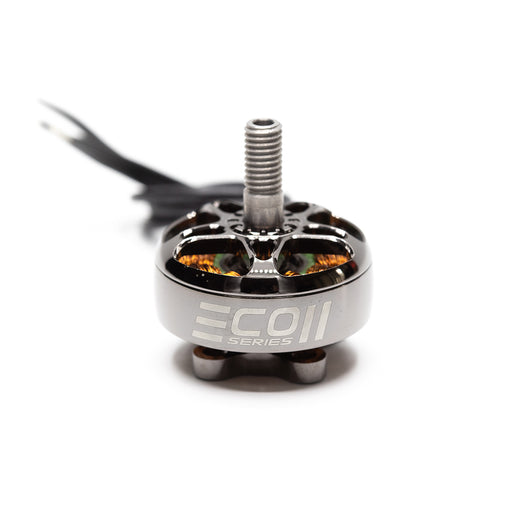
- Examples: T-Motor F60 Pro IV (2207 1750KV for 6S), Emax Eco II Series (2306 2400KV for 4S), or Lumenier Skip 2207 1800KV are excellent "best FPV motors for freestyle" options.
Racing Dominance: Raw Speed and Quick Response
Racers demand raw speed, rapid acceleration, and minimal latency to shave milliseconds off lap times.
- Characteristics: High RPM potential, instant throttle response, and often lighter overall weight.
- Motor Choices: Tend to lean towards higher KV motors (e.g., 1900-2000KV for 6S, or 2500-2700KV for 4S) with stator sizes like 2207 or 2306. The goal is maximum RPM and punch.
- Examples: Motors like the Lumenier Skip 2207 2700KV (for 4S) or T-Motor F70 2306 1950KV (for 6S) are built for speed.
Cinematic & Long-Range: Efficiency and Stability
For cinematic shots and extended flights, efficiency, smooth power delivery, and vibration reduction are paramount.
- Characteristics: Lower KV, larger stators for torque, excellent efficiency, and minimal vibrations.
- Motor Choices: Typically low KV motors (e.g., 1700-1900KV for 6S) paired with larger stators like 2507, 2806.5, or even 3110 to spin larger, more efficient propellers. The "FPV motor efficiency guide" principles are key here.
- Examples: Motors like the PyroDrone Hyperlite 2806.5 1722KV or iFlight XING2 2806.5 1700KV are excellent for 6-inch and 7-inch cinematic rigs.
Myth vs. Fact: Bigger Motors Always Mean More Power
Myth: A bigger motor (larger stator diameter or height) automatically means more usable power and better performance.
Fact: While larger motors can produce more raw thrust, "bigger" doesn't always mean "better."
- Efficiency Matters: An oversized motor on a lightweight drone with small props can be less efficient and heavier than a perfectly matched smaller motor.
- Weight Penalty: Larger motors are heavier, increasing your overall drone weight, which can negate any power gains and reduce agility or flight time.
- Proper Pairing is Key: A well-matched motor-prop-battery combination, even with slightly smaller motors, will often outperform an improperly paired, larger motor setup in terms of flight feel, efficiency, and overall performance. Focus on a balanced system.
Advanced Considerations and Common Mistakes to Avoid
Beyond the basics, a few advanced points and common pitfalls can make or break your FPV build.
Motor Efficiency and Heat Management
An efficient motor converts electrical energy into mechanical energy (thrust) with minimal loss as heat.
- Importance: Higher efficiency means longer flight times and cooler running motors, which extends their lifespan.
- Factors: Good quality magnets, precise windings, and optimal design contribute to efficiency.
- Tip: If your motors are consistently coming down excessively hot (too hot to touch for more than a second or two), it's a sign of inefficiency – either your KV/prop/battery combination is mismatched, or your tune is off, causing the motors to work too hard.
Durability, Bearings, and Build Quality
Investing in quality motors pays off in the long run.
- Bearings: High-quality bearings (like NSK or NMB) are crucial for smooth operation, reduced vibration, and longevity. Cheap bearings wear out quickly, leading to slop and noise.
- Bell Strength: The motor bell (the outer rotating part) should be robust enough to withstand minor impacts. Some brands use stronger alloys or thicker bells.
- Shaft Material: Titanium shafts are often preferred for their strength and lighter weight compared to steel.
- Brand Reputation: Brands like T-Motor, Emax, Lumenier, BrotherHobby, and iFlight are known for their quality and durability.
The ESC-Motor Connection: Amperage and Sync
Your Electronic Speed Controller (ESC) provides power to the motors.
- Amperage Rating: Ensure your ESCs have an amperage rating (e.g., 35A, 45A, 55A) that can handle the maximum current draw of your chosen motors. Motors often list their peak current draw. Undersized ESCs will overheat and fail.
- ESC Protocols: Modern ESCs use protocols like DShot (DShot300, DShot600, DShot1200) for precise and fast communication with the flight controller, which is vital for motor synchronization and smooth flight.
Common Motor Selection Pitfalls
Avoid these common mistakes to save yourself headaches and money:
- Mismatched KV/Battery: Running high KV motors on high voltage (e.g., 2700KV on 6S) is a recipe for disaster.
- Incorrect Prop Pairing: Using props that are too aggressive for your motor's torque, or too small for its speed potential, leads to inefficiency or lack of power.
- Overlooking Motor Mounting Patterns: Always double-check that your motor's mounting holes (e.g., 16x16mm) match your frame's mounts.
- Buying Solely Based on Price: While budget options like the Emax Eco II Series offer great value, extremely cheap, no-name motors often have poor bearings, weak bells, and inconsistent performance.
- Ignoring Weight: Remember that heavier motors add to the overall drone weight, which impacts flight time and agility.
Your FPV Motor Selection Checklist: Putting It All Together
Let's consolidate everything into a simple, actionable checklist to guide your next motor purchase.
Step 1: Define Your Flying Style & Goals
Are you building for:
- Freestyle: Balance of torque, responsiveness, and control.
- Racing: Raw speed, quick acceleration, punch.
- Cinematic/Long-Range: Efficiency, smooth power, stability, extended flight times.
- Hybrid: A mix of the above, requiring a balanced approach. This is the foundational decision that will influence all subsequent choices.
Step 2: Identify Your Drone Frame Size & Propeller Compatibility
- What size frame do you have (or plan to buy)? (e.g., 5-inch, 7-inch)
- What is the maximum propeller diameter your frame can accommodate? (e.g., 5.1-inch, 7-inch)
- What is the motor mounting pattern on your frame? (e.g., 16x16mm, 19x19mm)
Step 3: Choose Your Battery Voltage (LiPo Cells)
- Will you be flying 4S or 6S?
- 4S: Lighter, often more agile, but less torque.
- 6S: More torque, often more efficient, heavier, but requires lower KV motors. This choice heavily dictates your KV selection.
Step 4: Select Motor Size (Stator) and KV Rating
Using the information from the previous steps, narrow down your motor options:
- Stator Size:
- 5-inch: 2207, 2306, 2307, 2407 (or 2507 for heavy 5-inch)
- 6-inch: 2507, 2806.5
- 7-inch: 2806.5, 3110
- KV Rating:
- For 4S: High KV (2400KV - 2700KV)
- For 6S: Low KV (1700KV - 1900KV)
- Combine with flying style:
- Freestyle: Mid-range KV within your chosen voltage, good torque (e.g., 2306 1750KV for 6S).
- Racing: Higher KV within your chosen voltage, maximum punch (e.g., 2207 2700KV for 4S).
- Cinematic/Long-Range: Lower KV within your chosen voltage, larger stator for efficiency (e.g., 2806.5 1700KV for 6S).
Frequently Asked Questions About FPV Motors
What do the numbers (e.g., 2207, 2306) on FPV motors mean?
The first two digits indicate the stator diameter in millimeters, and the last two digits indicate the stator height in millimeters. For example, a 2207 motor has a 22mm diameter stator and a 7mm tall stator.
How does KV rating affect FPV motor performance and flight characteristics?
Higher KV motors spin faster per volt, offering more top-end speed but less torque, often leading to higher current draw. Lower KV motors spin slower but provide more torque, often resulting in better efficiency, smoother control, and better handling of larger or higher-pitch propellers, especially with higher voltage batteries.
How do I choose the right motor size and KV for my drone frame and flying style?
First, match motor stator size to your frame's prop compatibility (e.g., 5-inch frames typically use 22xx to 24xx motors). Then, select KV based on your battery voltage (e.g., 6S usually pairs with lower KV like 1700-1900KV, 4S with higher KV like 2400-2700KV) and flying style (freestyle often benefits from more torque, racing from higher RPMs).
What's the relationship between FPV motors, propellers, and battery voltage (LiPo cells)?
These three components form a crucial power triangle. Motors are chosen based on battery voltage (KV rating) and then paired with propellers that can efficiently translate the motor's power into thrust without over-drawing current or causing excessive heat. A balanced combination is key for optimal performance, efficiency, and component longevity.
What are common mistakes to avoid when selecting FPV motors?
Common mistakes include mismatching KV with battery voltage, choosing propellers that are too aggressive or too small for the motor, ignoring motor mounting patterns (e.g., 16x16mm vs 19x19mm), and buying solely based on the cheapest price, often leading to poor quality and short lifespan.
Power Up Your FPV Experience with the Perfect Motors
You've now got the knowledge to confidently navigate the world of FPV motors. By understanding stator size, KV ratings, and how to match them with your frame, props, battery, and flying style, you're equipped to make informed decisions. Don't let motor selection be a bottleneck to your FPV journey – use this guide to build a drone that flies exactly how you envision.
Remember, the perfect motor isn't necessarily the biggest or fastest, but the one that creates the most harmonious and efficient power system for your specific needs. Ready to put your knowledge to the test? Share your ideal motor setup in the comments below or check out our recommended motor brands for your next build!
Copyright-safe media generated locally by FPVLovers