FPV ESC Buying Guide: Current Rating, Firmware, and Stack Fit
A conservative ESC selection guide focused on compatibility and safety margins.
The Unseen Powerhouse: Why Your FPV ESC is More Critical Than You Think
In the thrilling world of FPV drones, we often obsess over flight controllers, powerful motors, and high-definition video systems. Yet, there's an unsung hero working tirelessly beneath the surface, a component whose performance directly dictates the smoothness, responsiveness, and even the safety of your flight: the Electronic Speed Controller, or ESC. Without a well-chosen ESC, even the most expensive motors become glorified paperweights, unable to translate commands into the precise, rapid rotations needed for agile flight.
Beyond the Buzz: What Exactly Does an FPV ESC Do?
At its core, an FPV ESC is the brain of each motor. It takes signals from your flight controller (FC) and converts them into the specific electrical pulses that drive your brushless motors. Think of it as the translator between your FC's flight commands (like "increase throttle on motor 1") and the motor's physical action. It precisely controls the speed and direction of each motor, allowing your drone to take off, hover, turn, and perform incredible acrobatics.
The Unsung Hero: Why a Good ESC is Critical for Flight Performance
A high-quality ESC is paramount for several reasons:
- Responsiveness: A good ESC reacts instantly to FC commands, leading to a "locked-in" feel and precise control, crucial for both racing and freestyle. Latency here can mean the difference between a clean trick and a painful crash.
- Smoothness: Efficient power delivery results in smoother motor operation, reducing vibrations and prop wash, which in turn improves video quality and flight stability.
- Efficiency: Modern ESCs are designed to be highly efficient, drawing only the necessary power, which translates to longer flight times and less heat generation.
- Reliability: A robust ESC can handle current spikes and high temperatures without failing, protecting your motors and ensuring consistent performance.
- Advanced Features: Modern ESCs offer features like current sensing, telemetry, and RPM filtering, providing valuable data to your flight controller and enhancing overall performance.
Anatomy of an FPV ESC: Understanding Its Core Components
To truly appreciate an ESC, it helps to understand its key parts:
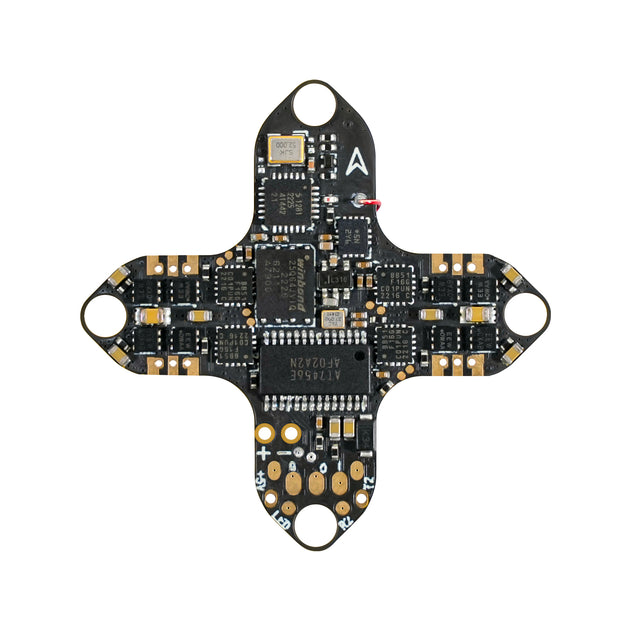
- MCU (Microcontroller Unit): This is the "brain" of the ESC, processing signals from the FC and generating the motor control pulses. Common MCUs include F0, F3, F4, and G071.
- MOSFETs (Metal-Oxide-Semiconductor Field-Effect Transistors): These are the workhorses that switch the high current to the motor coils. More robust MOSFETs mean higher current handling and better thermal performance.
- Capacitors: Essential for filtering out electrical noise and stabilizing voltage, preventing voltage spikes that can damage components.
- Shunt Resistors: Used for current sensing, allowing the ESC to report real-time current draw to the flight controller.
4-in-1 vs. Individual ESCs: Choosing Your Drone's Power Layout
One of the first decisions you'll face when building an FPV drone is whether to opt for a single 4-in-1 ESC or four individual ESCs. Both configurations have distinct advantages and disadvantages.
The All-in-One Advantage: Pros and Cons of 4-in-1 ESCs
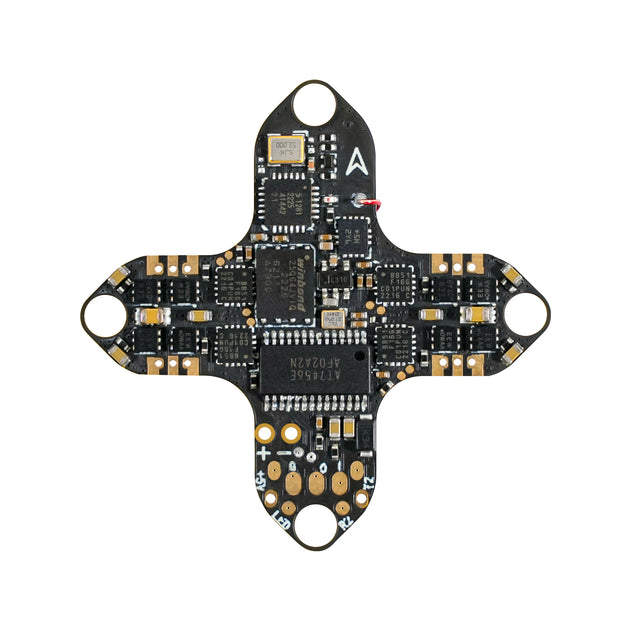
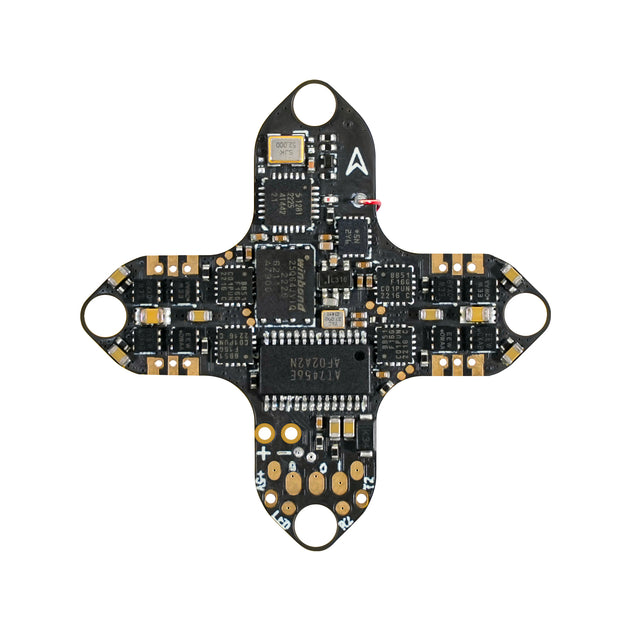
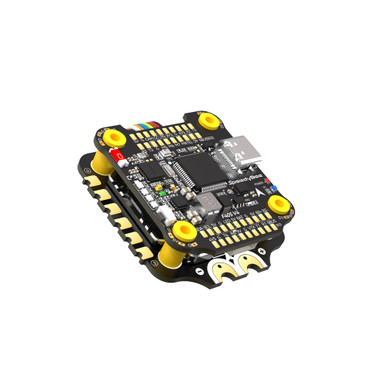
A 4-in-1 ESC combines all four motor controllers onto a single PCB (Printed Circuit Board), typically designed to stack neatly with your flight controller.
Pros:
- Clean Builds: Significantly reduces wiring complexity, resulting in a much tidier and often lighter build. Less wiring means fewer potential points of failure.
- Easier Installation: Fewer connections to solder, making the build process quicker and simpler, especially for beginners.
- Compact Size: Ideal for smaller frames where space is at a premium (e.g., 3-inch or 5-inch freestyle drones).
- Reduced Electrical Noise: With all ESCs on one board, power delivery can be more uniform, potentially leading to cleaner signals.
Cons:
- Repairability: If one ESC fails, you often have to replace the entire 4-in-1 board, which can be more expensive than replacing a single individual ESC.
- Heat Dissipation: All four ESCs are concentrated in one area, potentially leading to higher localized heat buildup, especially in enclosed frames or during aggressive flying. Good airflow is crucial.
- Cost: While individual ESCs might seem more expensive initially, the replacement cost for a single failed individual ESC is much lower than replacing an entire 4-in-1.
Example: Popular 4-in-1 ESCs like the Hobbywing XRotor Micro 60A 4-in-1 or the T-Motor F55A Pro II 4-in-1 offer excellent performance and robust designs, perfect for a high-performance 5-inch build.
The Flexibility of Individual ESCs: Benefits and Drawbacks
Individual ESCs are separate units, one for each motor, mounted on the drone's arms or near the motors.
Pros:
- Repairability: The biggest advantage. If an ESC fails (e.g., due to a prop strike or hard crash), you only need to replace that single, inexpensive unit. This can save significant money in the long run for crash-prone pilots.
- Better Heat Dissipation: Spreading the ESCs out on the arms allows for better airflow and heat dissipation, potentially leading to more consistent performance during demanding flights.
- Customization: Offers more flexibility in component placement and wiring, which can be useful for unique frame designs or very large builds.
Cons:
- Complex Wiring: Requires more soldering and wiring, leading to a less clean build. More wires also mean more potential points of failure.
- Heavier and Bulkier: Individual ESCs and their associated wiring add more weight and take up more space, which can be a concern for lightweight builds.
- Aesthetics: Can look less tidy than a compact 4-in-1 stack.
Deciding Factors: Space, Repairability, and Build Complexity
- Space: For smaller frames (under 5 inches), 4-in-1 ESCs are almost always preferred due to space constraints. For larger frames (7-inch and up, or specialized cinematic drones), individual ESCs might be considered for their robustness and repairability.
- Repairability vs. Cost: If you're a beginner or fly aggressively and crash often, individual ESCs might save you money on replacement parts. If you're an experienced pilot who rarely crashes, a 4-in-1 offers a cleaner, more streamlined build.
- Build Complexity: Beginners will find 4-in-1 ESCs much easier to install. If you enjoy intricate soldering and wiring, individual ESCs offer that challenge.
Decoding FPV ESC Specifications: Amps, Volts, and the Brains Behind the Brawn
Understanding the numbers and acronyms associated with ESCs is crucial for making an informed decision.
Current Ratings (Amps): Matching Power to Your Motors
The amperage (Amp) rating indicates how much continuous current an ESC can safely handle. This is arguably the most critical specification.
- Continuous Current: The maximum current the ESC can safely supply to a motor for an extended period without overheating.
- Burst Current: A higher current rating the ESC can handle for very short durations (e.g., a few seconds during a punch-out).
Practical Tip: To choose the right amperage, you need to consider your motors. Look up the maximum current draw of your chosen motors at full throttle with your intended propeller on your battery voltage (e.g., 6S). A good rule of thumb is to choose an ESC with a continuous rating that is at least 20-30% higher than the combined maximum current draw of all four motors at full throttle. For example, if your motors draw 30A each at max throttle, you need a total of 120A (4x30A). A 4-in-1 ESC should ideally be rated for at least 35-40A per motor (140-160A total continuous) to provide a comfortable buffer. For individual ESCs, a 40A individual ESC would be a safe bet. Over-speccing slightly is always better than under-speccing, as it provides a safety margin and reduces heat.
Voltage Compatibility (S-Rating): Powering Your Drone Safely
The S-rating (e.g., 4S, 6S) indicates the maximum battery voltage the ESC can handle. It's vital to match this to your battery choice.
- Most modern FPV ESCs support 3S-6S LiPo batteries, with many newer models supporting up to 8S for larger, long-range, or X-Class drones.
- Never use a battery with a higher S-rating than your ESC is rated for, as this will almost certainly destroy the ESC.
- Ensure your motors are also compatible with your chosen voltage.
MCU (Microcontroller Unit): The Processing Power of Your ESC
The MCU is the "brain" that processes signals and controls the MOSFETs. Its speed and capabilities determine the ESC's responsiveness and support for advanced features.
- BLHeli_S ESCs commonly use 8-bit MCUs like the EFM8BB21F16G (F3) or C8051F39X (F0). These are perfectly capable for most pilots but have limitations in processing power.
- BLHeli_32 ESCs utilize more powerful 32-bit MCUs, such as the STM32F051, STM32F334, G071, or L431. The G071 MCU is particularly popular in high-end BLHeli_32 ESCs due to its excellent processing speed and lower cost compared to some STM32 variants, enabling higher PWM frequencies and more advanced features.
Capacitors and Filtering: Ensuring Clean Power Delivery
Capacitors are crucial for filtering out electrical noise (voltage ripple) generated by the motors and stabilizing the voltage supplied to the ESC and, indirectly, to other components like your flight controller and video system.
- A quality ESC will have sufficient capacitance, often indicated by an included low ESR (Equivalent Series Resistance) capacitor that you solder to the main battery pads.
- Practical Tip: For 6S builds or setups with high current draw, adding an extra low ESR capacitor (e.g., 1000uF 35V for 6S) to your main battery leads is highly recommended to further reduce voltage spikes and noise, protecting your electronics and improving video quality.
Firmware Face-Off: BLHeli_S vs. BLHeli_32 and Beyond
The firmware running on your ESC dictates its capabilities, performance, and features. The two dominant players in FPV are BLHeli_S and BLHeli_32.
BLHeli_S: The Reliable Workhorse for Budget-Conscious Builds
BLHeli_S is an open-source 8-bit ESC firmware known for its reliability and widespread adoption.
Pros:
- Cost-Effective: ESCs running BLHeli_S are generally more affordable.
- Proven Performance: Offers excellent performance for the majority of pilots, especially when paired with DShot protocols.
- Easy to Use: Simple configuration interface.
Cons:
- Limited Features: Lacks advanced features like bi-directional DShot (for RPM filtering), motor timing adjustment, and true telemetry (though some offer basic current sensing).
- Lower PWM Frequency: Typically operates at a lower PWM (Pulse Width Modulation) frequency compared to BLHeli_32, which can result in slightly less smooth motor control at very high RPMs.
Example: Many affordable yet capable 20A-45A 4-in-1 ESCs, like those from Eachine or GEPRC, often come with BLHeli_S firmware, making them great for budget builds or smaller drones.
BLHeli_32: Unleashing Advanced Performance and Features
BLHeli_32 is the successor to BLHeli_S, leveraging 32-bit MCUs to offer a significant leap in performance and features.
Pros:
- Higher PWM Frequency: Operates at much higher PWM frequencies (up to 48kHz or even 96kHz on some G071 MCUs), leading to smoother, more precise motor control and reduced motor noise.
- Bi-directional DShot (RPM Filtering): This is a game-changer. It allows the ESC to send motor RPM data back to the flight controller, enabling advanced RPM filtering. This drastically reduces motor noise reaching the gyros, allowing for higher PID gains and a much "cleaner" flight feel.
- Telemetry: Full ESC telemetry (RPM, temperature, voltage, current) can be sent back to the FC and OSD, providing valuable real-time data.
- Programmable LED: Some BLHeli_32 ESCs support programmable RGB LEDs.
- Configurable Motor Timing: Allows fine-tuning motor performance for specific setups.
- Active Freewheeling (Damped Light): Efficiently brakes the motor, improving responsiveness and efficiency.
Cons:
- Higher Cost: BLHeli_32 ESCs are generally more expensive due to the more powerful MCU.
- Potentially More Complex Configuration: While the basics are simple, unlocking all advanced features might require a deeper understanding.
Example: High-end ESCs like the Foxeer Reaper F745 65A 4-in-1 or the iFlight BLITZ E55 4-in-1 feature BLHeli_32 firmware, often with powerful G071 or F4 MCUs, delivering top-tier performance for competitive racing and demanding freestyle.
Other Firmware Options: KISS, AM32, and Their Niche Applications
While BLHeli_S and BLHeli_32 dominate, other firmwares exist for specific needs:
- KISS: Known for its proprietary hardware and firmware, offering a highly integrated and performance-focused ecosystem. KISS ESCs are often praised for their raw feel and responsiveness but come at a premium price and less open compatibility.
- AM32: An open-source 32-bit alternative to BLHeli_32, gaining traction for its flexibility and continued development. It offers many similar features to BLHeli_32.
ESC Protocols: The Language Connecting Your Flight Controller to Your Motors
The ESC protocol is the communication language between your flight controller and your ESCs. It dictates how quickly and accurately commands are transmitted.
The Digital Revolution: DShot Explained and Why It's the Standard
DShot (Digital Shot) is a digital communication protocol that has become the undisputed standard in FPV.
Key Advantages of DShot:
- Digital Signal: Unlike older analog protocols, DShot is a digital signal, making it immune to electrical noise and calibration issues. This means more precise and consistent motor control.
- No Calibration: Eliminates the need for ESC calibration, simplifying setup.
- Faster Communication: DShot protocols (DShot150, DShot300, DShot600, DShot1200) indicate the speed in kilobits per second. DShot600 is the most common and recommended for most FPV builds, offering a good balance of speed and reliability.
- Built-in Telemetry (Bi-directional DShot): As mentioned with BLHeli_32, DShot can send data back from the ESC to the FC, enabling RPM filtering and other advanced features.
- CRC (Cyclic Redundancy Check): DShot includes a checksum, ensuring data integrity. If a packet is corrupted, the ESC knows to ignore it, preventing erroneous motor commands.
Legacy Protocols: OneShot and MultiShot (And Why They're Fading)
Before DShot, analog protocols like OneShot125 and MultiShot were popular.
- OneShot125: An improvement over standard PWM, offering faster communication (125-250 microseconds per frame).
- MultiShot: Even faster than OneShot125 (5-25 microseconds per frame).
Why They're Fading: These analog protocols are susceptible to electrical noise, require calibration, and lack the advanced features and precision of DShot. They are rarely used in modern FPV builds.
Why DShot Reigns Supreme: Benefits, Compatibility, and Future-Proofing
DShot's digital nature, speed, noise immunity, and support for bi-directional communication make it the clear winner. All modern flight controllers and ESCs support DShot. When building a new drone, always ensure your ESCs support DShot600 or higher for optimal performance and future compatibility. It's the standard for a reason.
Your Ultimate FPV ESC Buyer's Guide: Making the Right Choice
Now that we've delved into the technicalities, let's put it all together to help you choose the perfect FPV ESC for your next build.
Matching ESCs to Your Motors and Battery (e.g., 4S, 6S)
This is the most critical step.
- Check Motor Max Current: Find the maximum current draw (Amps) of your chosen motor with your intended propeller and battery voltage (e.g., a 2306 1700KV motor on 6S with a 5-inch prop might draw 35-40A at full throttle). Motor manufacturers often provide this data.
- Add a Buffer: Select an ESC with a continuous rating at least 20-30% higher than your motor's max draw. If your motor draws 35A, aim for a 45-50A ESC. This provides a safety margin against overheating and current spikes.
- Verify S-Rating: Ensure the ESC's voltage rating (e.g., 6S) matches or exceeds your battery's S-rating.
- Consider Burst Rating: While continuous rating is primary, a high burst rating indicates robust MOSFETs that can handle momentary spikes.
Example: For a typical 5-inch freestyle drone running 2207 1800KV motors on 6S, a 50A BLHeli_32 4-in-1 ESC (like the Lumenier BLHeli_32 50A 4-in-1 or T-Motor F55A Pro II) would be an excellent choice, offering plenty of headroom and advanced features.
ESCs for Different Flying Styles: Racing, Freestyle, and Cinematic
- FPV Racing: Prioritize low latency, high burst current, and rapid response. BLHeli_32 firmware with a fast MCU (like G071) is essential for RPM filtering and maximum precision. Look for 4-in-1 ESCs to keep weight down and builds clean. Amperage should be sufficient for peak performance (e.g., 50-60A for 5-inch racers).
- FPV Freestyle: Focus on smoothness, durability, and a robust design that can withstand crashes. BLHeli_32 is highly recommended for RPM filtering, which makes the drone feel incredibly locked in and smooth through complex maneuvers. Good quality MOSFETs and sufficient capacitors are key. Amperage (e.g., 45-60A for 5-6 inch freestyle) should allow for aggressive throttle inputs.
- Cinematic/Long-Range: Reliability, efficiency, and precise low-throttle control are paramount. BLHeli_32 offers the fine-tuned control needed for smooth cinematic shots. Higher continuous current ratings are important for larger props and heavier payloads. Individual ESCs might be considered for larger rigs (7-inch+) for better heat dissipation and repairability.
Top Features to Look For in a Modern FPV ESC
- BLHeli_32 Firmware: For all the advanced features, performance, and RPM filtering.
- DShot600 (or higher) Support: Standard for digital, noise-free communication.
- Current Sensing: Provides real-time current draw to your OSD, crucial for battery management.
- Telemetry: Allows monitoring of motor RPM, temperature, and voltage.
- Robust MOSFETs and PCB: Look for quality components and good soldering pads for durability.
- External Capacitor Included/Recommended: Essential for filtering noise, especially on 6S.
- Good Heat Sinking/Layout: Helps dissipate heat efficiently.
Budgeting for Your ESC: Where to Save, Where to Splurge
- Where to Save: For a very first build or a small, lightweight drone (e.g., a 3-inch toothpick), a well-regarded BLHeli_S 4-in-1 ESC might be sufficient and save you some money. You can get decent performance without breaking the bank.
- Where to Splurge: For serious racing, aggressive freestyle, or any build where performance and reliability are paramount, investing in a high-quality BLHeli_32 ESC (especially with a G071 MCU) is highly recommended. The benefits of RPM filtering and superior control are worth the extra cost. Don't skimp on your ESC; it's the heart of your drone's power system.
FPV ESC FAQs: Your Common Questions Answered
What's the most important specification to consider when buying an FPV ESC?
The continuous current rating (Amps) is arguably the most important, followed closely by voltage compatibility (S-rating) and firmware (BLHeli_32 for advanced features). Ensure the Amp rating comfortably exceeds your motor's maximum draw, and the S-rating matches your battery.
Should I choose a 4-in-1 ESC or individual ESCs for my FPV drone build?
For most 5-inch and smaller FPV drones, a 4-in-1 ESC is recommended due to cleaner wiring, lighter weight, and easier installation. For larger builds (7-inch+), or if repairability and heat dissipation are your absolute top priorities, individual ESCs might be considered.
What's the difference between BLHeli_S and BLHeli_32 firmware, and which is better for my needs?
BLHeli_S is an 8-bit firmware, more budget-friendly, and offers solid performance for most pilots. BLHeli_32 is a 32-bit firmware that provides higher PWM frequencies, full telemetry, and crucially, bi-directional DShot for RPM filtering, leading to significantly smoother and more responsive flight. For optimal performance, especially in racing and freestyle, BLHeli_32 is superior.
How do I match an FPV ESC to my specific motors and battery voltage (e.g., 4S, 6S)?
- Find your motor's maximum current draw (Amps) with your chosen propeller and battery voltage.
- Select an ESC with a continuous Amp rating at least 20-30% higher than that maximum draw.
- Ensure the ESC's S-rating (e.g., 4S, 6S) is compatible with your battery.
Is a higher amperage rating always better for an FPV ESC?
While having some headroom is good, an excessively high amperage rating isn't necessarily "better" if it comes with increased size, weight, or cost without a tangible benefit. Choose an ESC that provides a safe buffer (20-30% over your motor's max draw) without being overly oversized. However, never go under the required rating.
Elevate Your Flight: Choosing Your Perfect FPV ESC
Choosing the right FPV ESC is a crucial decision that impacts every aspect of your drone's performance. It's not just about raw power; it's about precision, efficiency, and reliability. By understanding the specifications, firmware options, and configurations, you can confidently select an ESC that will unlock your drone's full potential.
Recap of Key Decision Points for ESC Selection
- 4-in-1 vs. Individual: Cleanliness/Compactness vs. Repairability/Heat Dissipation.
- Amperage (Continuous & Burst): Match and exceed your motor's maximum current draw.
- Voltage (S-Rating): Ensure compatibility with your battery.
- Firmware (BLHeli_S vs. BLHeli_32): Performance vs. Budget. BLHeli_32 is recommended for advanced features.
- Protocols (DShot): Essential for modern, noise-free communication and RPM filtering.
Final Tips for a Successful FPV Drone Build
- Don't Skimp on Quality: A cheap ESC can be a point of failure and frustration. Invest in a reputable brand.
- Add an External Capacitor: Especially for 6S builds, it's cheap insurance against voltage spikes and noise.
- Good Soldering: Clean, strong solder joints are vital for reliable power delivery.
- Test Thoroughly: Always bench test your motors and ESCs before your maiden flight.
Call to Action: Build Your Dream Drone Today with Confidence!
With this comprehensive guide, you're now equipped to make an informed decision about your FPV ESC. Go forth, choose wisely, and build the FPV drone of your dreams. The sky is waiting!
RELATED GUIDES
Copyright-safe media generated locally by FPVLovers
Catalog/source image: BETAFPV
Catalog/source image: T-Motor
Catalog/source image: Diatone
BETAFPV
T-Motor
Diatone