FPV LiPo Battery Safety & Charging Guide: Prevent Fires and Fly Longer
A comprehensive safety and configuration guide explaining how LiPo batteries work, safe charging rates (1C), storage voltage (3.8-3.85V), parallel charging, and how to safely dispose of damaged cells.
FPV LiPo Battery Safety & Charging Guide: Prevent Fires and Fly Longer
The FPV LiPo Battery Blueprint: Mastering Power, Performance, and Safety for Every Pilot
Unleash Your Drone's True Power: Why Mastering FPV LiPo Batteries is Non-Negotiable
Every FPV pilot knows the thrill of flight, the rush of speed, and the precision of a perfectly executed maneuver. But behind every successful aerial ballet and adrenaline-pumping dive is the unsung hero: the LiPo battery. Far more than just a power source, your Lithium Polymer (LiPo) battery is the beating heart of your FPV drone, dictating performance, flight time, and most importantly, safety.
Without a solid understanding of LiPo batteries, pilots risk not only suboptimal performance but also potential hazards. This comprehensive guide, "The FPV LiPo Battery Blueprint," is designed to equip beginner and intermediate pilots with the essential knowledge to choose, use, maintain, and safely manage their LiPo batteries. From decoding cryptic labels to mastering charging techniques, we'll ensure you're powered up for confident, exhilarating, and safe flights. Get ready to transform your understanding of FPV power and unlock your drone's true potential!
Decoding the Powerhouse: What Makes an FPV LiPo Tick?
Before we dive into selection and care, let's break down the fundamental characteristics of an FPV LiPo battery. Understanding these terms is crucial for making informed decisions.
The Anatomy of a LiPo Cell: Voltage and Series (S-Rating)
At its core, a LiPo battery is made up of individual cells. Each LiPo cell has a nominal voltage of 3.7 Volts (V). When fully charged, a single cell reaches 4.2V, and it should never be discharged below 3.2V (ideally 3.5V for longevity).
The "S-rating" on your battery indicates how many of these cells are connected in series.
- 1S: One cell, 3.7V nominal (4.2V fully charged). Common for tiny whoops like the Mobula6.
- 2S: Two cells in series, 7.4V nominal (8.4V fully charged). Often used for smaller micro drones.
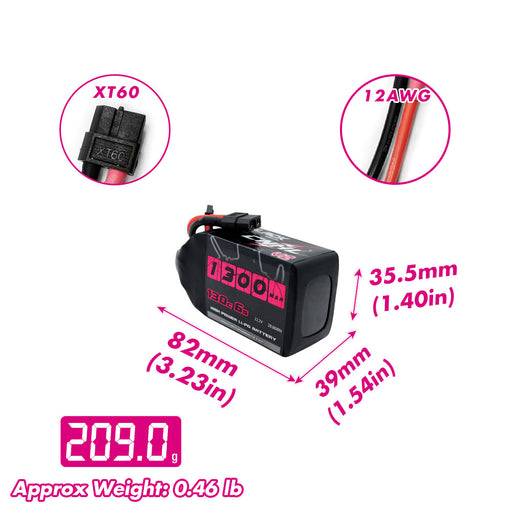
- 4S: Four cells in series, 14.8V nominal (16.8V fully charged). The most common choice for 5-inch freestyle drones, offering a great balance of power and efficiency. A prime example is the Holybro Kopis2 HDV, which thrives on 4S power for agile flight.
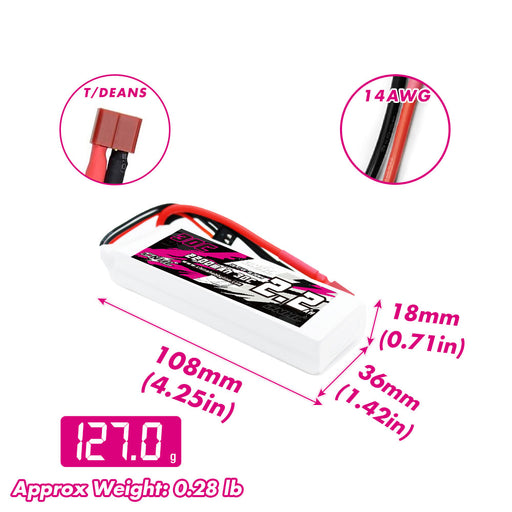
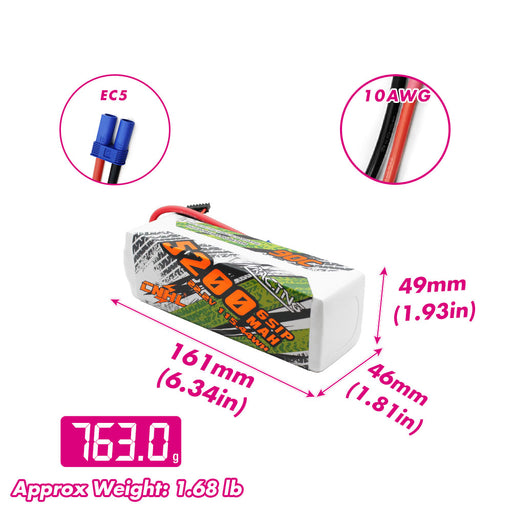
- 6S: Six cells in series, 22.2V nominal (25.2V fully charged). Favored by pilots seeking maximum power for aggressive freestyle, racing, or longer-range flights, where higher voltage means less current draw for the same power, leading to cooler ESCs and motors.
A higher S-rating means higher voltage, which in turn translates to higher motor RPM (Revolutions Per Minute) and greater overall power, assuming your motors are rated for that voltage.
Capacity (mAh): Understanding Flight Time and Weight
Capacity, measured in milliampere-hours (mAh), tells you how much energy the battery can store. Simply put, a higher mAh rating generally means longer flight times. For example, a 1500mAh battery can theoretically deliver 1500mA (1.5A) for one hour, or 3000mA (3A) for 30 minutes.
However, there's a trade-off: more capacity means more cells or larger cells, which increases the battery's physical size and weight. While a bigger battery extends flight time, it also adds inertia to your drone, potentially reducing agility and responsiveness. For a 5-inch freestyle drone, a 1300mAh 4S battery might offer a good balance for aggressive flying, while a 1800mAh 4S pack would provide longer cruising but make the drone feel heavier. Pilots must find the sweet spot between desired flight time and the agility required for their flying style.
Discharge Rate (C-Rating): Delivering the Punch Your Motors Need
The "C-rating" is arguably one of the most misunderstood specifications, yet it's critical for performance. It indicates the battery's ability to safely deliver current (amperage) to your motors without overheating or experiencing excessive voltage sag.
- Continuous C-rating: The maximum current the battery can safely deliver continuously.
- Burst C-rating: The maximum current it can deliver for short bursts (typically a few seconds).
To calculate the maximum continuous discharge current in Amperes (A), use this formula:
Max Continuous Current (A) = C-rating * Capacity (mAh) / 1000
For example, a 4S 1300mAh 75C battery can continuously deliver 75 * 1300 / 1000 = 97.5 Amperes. If your drone's motors and ESCs combined pull 120A at full throttle, a 75C 1300mAh battery might struggle, leading to significant voltage sag (a drop in voltage under load), reduced power, and premature battery degradation due to overheating.
Choosing a C-rating that is too low for your setup will result in sluggish performance, excessive heat generation in the battery, and a shortened lifespan. While a higher C-rating doesn't inherently give you more power than your motors can draw, it ensures the battery isn't being stressed, allowing it to maintain voltage under load and last longer.
Choosing Your Drone's Lifeline: Finding the Perfect FPV LiPo
Selecting the right LiPo battery is paramount for performance, safety, and the overall enjoyment of your FPV experience. Here's how to make an informed choice.
Matching Voltage (S-Rating) to Your Drone's Setup
The S-rating is the first and most critical factor. Your flight controller, ESCs (Electronic Speed Controllers), and motors all have specific voltage limits.
- Tiny Whoops (65-75mm): Almost universally use 1S LiPos (e.g., 300-450mAh).
- 2-3 inch Micro Drones: Often use 2S or 3S (e.g., 450-850mAh).
- 4-5 inch Freestyle/Racing Drones: Typically run on 4S or 6S. For a common 5-inch build like the Holybro Kopis2 HDV, 4S (1300-1500mAh) is standard for a good balance, while 6S (1100-1300mAh) offers more raw power and efficiency for demanding pilots.
- 7-inch Long-Range Drones: Primarily use 6S (e.g., 1800-2200mAh) for extended flight times and efficient power delivery.
Always check the voltage compatibility of all your components before connecting a battery!
Balancing Capacity (mAh) and Weight for Optimal Performance
The mAh rating directly impacts flight time and weight. Consider your drone's size and your flying style:
- Tiny Whoops: 300-450mAh 1S.
- 3-inch Drones: 450-850mAh 3S or 4S.
- 5-inch Drones: 1300-1500mAh 4S for agile freestyle, or 1100-1300mAh 6S for higher power. If you want longer flight times for cinematic cruising, you might go up to 1800mAh 4S or 1500mAh 6S, but be aware of the added weight.
- 7-inch Long-Range: 1800-2200mAh 6S.
Lighter batteries generally result in a more agile and responsive drone, while heavier ones offer more momentum and stability, albeit with reduced "floatiness."
Selecting the Right C-Rating for Power and Longevity
As discussed, the C-rating must be sufficient to meet your drone's current demands.
- For aggressive freestyle or racing with 5-inch drones, look for 75C to 120C continuous ratings.
- For cruising or cinematic flying, 45C to 60C might suffice, but higher is always safer for battery health.
Over-speccing the C-rating slightly is a good practice. It means your battery isn't working as hard, which translates to less heat, less voltage sag, and a longer overall lifespan for the battery. Don't cheap out on C-rating; it's a critical performance and longevity factor.
Physical Dimensions and Connector Types
Finally, ensure the battery physically fits your drone's frame and that the connector matches your ESCs.
- XT30: Rated for up to 30A. Common on 2-4S micro drones and cinewhoops.
- XT60: Rated for up to 60A. The most ubiquitous connector for 4S and 6S 5-inch and larger drones.
- JST-PH 2.0 (PowerWhoop connector): Used for 1S tiny whoops due to its lower current limit.
- Balance Lead: This small white connector (e.g., JST-XH) is used for balance charging and checking individual cell voltages.
Always double-check both the main power connector and the balance lead type.
The Art of Charging: Maximizing Life and Ensuring Safety
Proper charging is the cornerstone of LiPo battery health and safety. Neglecting best practices can lead to catastrophic failure.
Essential Charging Gear: Chargers, Balance Boards, and Power Supplies
To safely charge your FPV LiPos, you'll need:
- Intelligent Balance Charger: This is non-negotiable. A good charger can balance individual cell voltages, discharge for storage, and has various safety features. The SkyRC Q200 is an excellent example, known for being one of the best drone LiPo battery chargers, offering multiple charging ports and high wattage. Other popular options include the ToolkitRC M4Q/M6D or iSDT Q8.
- Power Supply: Your charger needs a compatible power source (e.g., 12V DC for field charging or an AC/DC power supply for home use).
- LiPo Safe Bag/Box: A fire-resistant enclosure to contain any potential thermal runaway during charging.
- Parallel Charging Board (Optional but Recommended): Allows you to charge multiple batteries of the same S-rating and similar voltage simultaneously, saving time. Always use caution and follow instructions meticulously.
- Voltage Checker/Alarm: A small device to quickly check overall voltage and individual cell voltages.
Step-by-Step Safe Charging Practices
- Inspect Batteries: Before charging, visually inspect each battery for any signs of damage (puffing, punctures, bent corners, liquid leaks). NEVER charge a damaged battery.
- Safe Environment: Place the battery inside a LiPo safe bag or fire-resistant container, on a non-flammable surface (e.g., concrete floor, ceramic tile), away from combustibles.
- Connect Properly:
- Connect the main power lead (XT60/XT30) to the charger's main output.
- Connect the balance lead (small white connector) to the charger's balance port.
- If using a parallel board, connect all batteries to the board first, then the board to the charger.
- Set Charger Parameters:
- Select "LiPo Balance Charge" mode.
- Set the correct S-rating (e.g., 4S).
- Set the charge current. A common safe rate is 1C (e.g., for a 1300mAh battery, charge at 1.3 Amps). Some modern LiPos can handle higher C-rates (e.g., 2C or 3C) but always follow the manufacturer's recommendations.
- Start Charging: Initiate the charge cycle and NEVER leave charging batteries unattended.
Understanding Balance Charging and Its Importance
LiPo cells, even within the same pack, can slightly drift in voltage during use. Balance charging ensures that all cells within the battery pack are charged to the same voltage (4.2V per cell) by the end of the cycle. This is crucial because:
- Safety: Prevents individual cells from being overcharged, which can lead to overheating and fire.
- Longevity: Maintains the health of each cell, extending the overall lifespan of the battery.
- Performance: Ensures consistent power delivery across all cells.
Critical Safety Precautions During Charging
- Always use a LiPo safe bag or fire-resistant container.
- Charge on a non-flammable surface.
- Never leave charging batteries unattended.
- Do not charge damaged, puffed, or pierced batteries.
- Do not overcharge: Stop charging once the charger indicates completion.
- Do not exceed the manufacturer's recommended charge rate (usually 1C, unless specified).
- Keep a fire extinguisher (CO2 or dry chemical) nearby.
- Avoid charging in direct sunlight or extremely hot environments.
Beyond the Flight: Proper Storage and Maintenance for Longevity
Your LiPo batteries spend more time in storage than in flight, so proper care during downtime is just as important as proper charging.
The Golden Rule: Storage Voltage and Conditions
The single most important rule for LiPo battery longevity is to store them at their nominal storage voltage: 3.8V to 3.85V per cell. Most intelligent chargers have a "LiPo Storage" mode that will automatically charge or discharge your batteries to this level.
- Why? Storing fully charged LiPos for extended periods (more than 24-48 hours) significantly degrades their internal chemistry, leading to puffing and reduced capacity. Storing them fully discharged can also damage cells.
- Ideal Storage Environment: Store batteries in a cool, dry place, away from direct sunlight, extreme temperatures, and flammable materials. A LiPo safe bag or ammunition box is recommended even for storage.
Recognizing and Handling Puffed or Damaged Batteries
A healthy LiPo battery should feel firm and flat. Any swelling or "puffing" indicates that gasses are building up inside the cells, usually due to chemical degradation from over-discharging, overcharging, or excessive heat.
- Signs of Damage: Puffing, punctures, cuts, severe dents, bent balance leads, unusual heat, or a strong chemical smell.
- Immediate Action: If you notice a puffed or damaged battery, immediately move it to a safe, isolated, fire-resistant location outdoors, away from anything flammable. Do not attempt to charge or use it. It's time for safe disposal.
Tips for Maximizing Your LiPo's Lifespan
- Avoid Over-Discharging: Never fly your drone until the battery is completely dead. Aim to land when individual cell voltages reach around 3.5V-3.6V under load, or 3.7V-3.8V after resting. Pushing below 3.2V per cell causes irreversible damage.
- Don't Store Fully Charged: As mentioned, always discharge to storage voltage if you don't plan to fly within a day or two.
- Let Batteries Cool: Allow batteries to cool down completely after a flight before recharging them. Charging a hot battery can cause damage.
- Regularly Check Internal Resistance (IR): Many advanced chargers can measure IR per cell. A healthy new battery will have low IR (e.g., 2-10 mΩ per cell). As batteries age, their IR increases. A significant jump (e.g., above 20-30 mΩ for a 5-inch pack) indicates degradation.
- Gentle Handling: Avoid dropping batteries or subjecting them to hard impacts.
- Clean Connectors: Keep XT60/XT30 and balance connectors clean and free of dirt or corrosion.
When to Retire: Troubleshooting and Safe LiPo Disposal
Even with the best care, LiPo batteries have a finite lifespan. Knowing when to retire them is crucial for safety and performance.
Common LiPo Issues: Voltage Sag, Internal Resistance, and Cell Imbalance
- Voltage Sag: A noticeable drop in voltage under throttle. This is normal to some extent, but excessive sag (e.g., dropping from 4.0V to 3.2V under moderate load) indicates a weak or aging battery, often due to high internal resistance or insufficient C-rating.
- High Internal Resistance (IR): As cells degrade, their IR increases, making it harder for them to deliver current efficiently. This manifests as voltage sag and reduced power. Monitor IR with your charger; consistently high or rapidly increasing IR is a sign of a dying battery.
- Cell Imbalance: When cells within a pack have significantly different voltages (e.g., one cell at 3.7V, another at 3.5V). A good balance charger can often correct minor imbalances, but persistent or severe imbalance might mean a damaged cell.
Identifying When a LiPo is No Longer Safe to Use
It's time to retire a LiPo if it exhibits any of the following:
- Significant Puffing: Any noticeable swelling of the battery pack. This is a major safety concern.
- High Internal Resistance: If the IR values are consistently high (e.g., above 20-30 mΩ per cell for a 5-inch pack) and performance is noticeably degraded.
- Severe Voltage Sag: Even with a moderate throttle, the voltage drops dramatically, making the drone feel sluggish.
- Physical Damage: Punctures, deep cuts, crushed corners, or bent connectors that cannot be safely repaired.
- Persistent Cell Imbalance: If your charger struggles to balance the cells, or they drift apart quickly after charging.
- Doesn't Hold Charge: The battery charges slowly, doesn't reach full voltage, or loses voltage rapidly in storage.
When in doubt, it's always safer to retire a battery. The cost of a new LiPo is far less than the cost of a fire or a crashed drone.
Environmentally Responsible LiPo Battery Disposal
Never throw LiPo batteries in the regular trash. They are hazardous waste. Safe disposal involves fully discharging the battery before taking it to a recycling center.
- Full Discharge: The goal is to bring each cell down to 0V.
- Salt Water Bath: A common method. Submerge the battery in a bucket of salt water (about 1 tablespoon of salt per liter of water) for several days. Ensure the connectors are submerged. The battery will slowly discharge. Once it reads 0V on a voltage checker, it's safe to dispose of.
- Dedicated LiPo Dischargers: Some specialized devices can safely discharge LiPos to 0V.
- Incandescent Light Bulb: Connect an old incandescent light bulb (e.g., a car headlight bulb) to the main power connector. It will slowly draw current until the battery is dead.
- Recycle: Once fully discharged (and confirmed at 0V), tape the connectors to prevent short circuits and take the battery to a local battery recycling facility or hazardous waste collection point. Many electronics stores also offer battery recycling programs.

The FPV Pilot's Arsenal: A Buyer's Guide to LiPo Batteries & Accessories
Equipping yourself with quality gear is essential for a safe and enjoyable FPV journey.
Top FPV LiPo Battery Brands and Recommendations
Investing in reputable brands ensures better quality, consistency, and longevity.
- Tattu R-Line: Widely regarded as a premium choice, offering high C-ratings and excellent performance for racing and freestyle.
- GNB (Gaoneng Battery): Popular for micro drones and tiny whoops, known for good performance and value.
- CNHL (China Hobby Line): Offers a great balance of performance and price, with various options for all drone sizes.
- Lumenier: Another strong performer, often favored by freestyle pilots for consistent power.
- Acehe, SMC, Thunder Power: Other reliable brands worth considering.
Recommendations:
- For Tiny Whoops (1S): GNB 300-450mAh 1S.
- For 5-inch Freestyle (4S): CNHL Black Series 1300-1500mAh 100C or Tattu R-Line 1300-1500mAh 120C.
- For 5-inch Freestyle/Long-Range (6S): CNHL Black Series 1100-1300mAh 100C or Tattu R-Line 1100-1300mAh 120C.
Essential LiPo Chargers for Every Budget
A good charger is an investment that pays dividends in battery life and safety.
- Budget-Friendly (Single Port): ISDT Q6 Nano or ToolkitRC M4Q. Compact, capable, and great for beginners.
- Mid-Range (Multi-Port/Higher Wattage): SkyRC Q200 (as mentioned, a fantastic choice for charging multiple batteries simultaneously), ToolkitRC M6D (dual-port, powerful, and compact).
- High-End (Professional): Chargers from brands like Revolectrix or Junsi, offering extreme precision and power for serious pilots.
Look for features like: multi-port charging, high wattage (e.g., 200W+), storage mode, discharge function, and internal resistance measurement.
Must-Have LiPo Accessories: Safety Bags, Voltage Checkers, and Paraboards
- LiPo Safe Bag/Box: Absolutely essential for charging and storage safety.
- LiPo Voltage Checker/Alarm: Small, inexpensive devices that plug into the balance lead to display individual cell voltages and total voltage. Many have alarms that beep if voltage drops too low during flight.
- Parallel Charging Board: Speeds up charging for multiple batteries of the same S-rating. Always use with caution and understanding.
- Battery Straps: Securely hold your LiPo to the drone frame. Silicone-lined straps offer superior grip.
- Fire Extinguisher: A small CO2 or dry chemical extinguisher should be part of your FPV kit, especially when charging or flying.
FPV LiPo FAQs: Your Burning Questions Answered
How do I choose the right FPV LiPo battery for my drone?
Match the S-rating (voltage) to your drone's components (motors, ESCs, FC). Select the mAh (capacity) based on desired flight time and the drone's weight limits for agility. Ensure the C-rating (discharge rate) is sufficient for your motors' current draw. Finally, check physical dimensions and connector type.
What do the numbers (S, C, mAh) on an FPV LiPo battery mean?
- S (Series): Indicates the number of cells in series, determining the battery's total nominal voltage (e.g., 4S = 4 cells * 3.7V = 14.8V).
- mAh (Milliampere-hours): Represents the battery's capacity, directly related to flight time.
- C-rating: The discharge rate, indicating how much current the battery can safely deliver (e.g., 75C).
What are the best practices for safely charging and storing FPV LiPo batteries?
Always use an intelligent balance charger. Charge batteries inside a LiPo safe bag on a non-flammable surface, and never leave them unattended. For storage, discharge or charge batteries to 3.8-3.85V per cell and keep them in a cool, dry, fire-resistant location.
When should I replace or dispose of my FPV LiPo battery?
Replace a LiPo if it shows signs of puffing, significant voltage sag under load, consistently high internal resistance, severe cell imbalance, or any physical damage (punctures, deep cuts). Dispose of it safely after fully discharging it to 0V.
How can I prevent common FPV LiPo battery problems like puffing or voltage sag?
Prevent puffing and sag by avoiding over-discharging (never below 3.2V/cell), not storing batteries fully charged for extended periods, using a battery with an adequate C-rating for your setup, allowing batteries to cool before recharging, and practicing proper charging and storage habits.
Conclusion: Master Your Power, Master Your Flight
Mastering FPV LiPo batteries is not just about understanding technical specifications; it's about embracing a mindset of safety, care, and informed decision-making. By following the blueprint laid out in this guide, you're not only extending the life of your batteries but also ensuring safer, more reliable, and ultimately more enjoyable flights. The power to perform is literally in your hands – handle it wisely.
Now that you're armed with this essential knowledge, go forth and fly with confidence!
Ready to take your FPV knowledge further? Explore our other FPV build guides and become a true master of the skies!
Copyright-safe media generated locally by FPVLovers